
Most site owners lose weeks each quarter waiting on writers before they can launch new programmatic pages. That delay keeps them from claiming fresh keyword clusters while competitors ship first. Autoblogging.ai and five other tools now promise to cut that lag.
By the end you will know which features separate tools that handle bulk generation and SERP analysis from those that do not. You will see how Autoblogging.ai ranks against Jasper, ChatGPT, Junia AI, Microsoft Word, and Google Docs. You will also have concrete criteria to pick the single option that fits your workflow and budget.
What to Look For in AI Article Writers for Programmatic SEO Content
Programmatic SEO requires AI writers that handle bulk content generation, SERP competitor analysis, and precise keyword optimization.
Teams evaluating tools need to check specific capabilities before committing resources. The right AI article writer reduces manual effort while maintaining quality standards across large content volumes.
SERP analysis depth determines whether a tool can scan top-ranking pages and extract competitive patterns. Strong analysis reveals content gaps and structure opportunities that weaker tools miss.
Effective SERP tools pull data on heading usage, word counts, and topical coverage. This information guides writers toward content that matches proven search success signals.
LSI keyword extraction helps identify related terms that search engines associate with primary topics. Tools using TF-IDF scoring surface secondary keywords that strengthen topical relevance without manual research.
Knowledge graph extraction adds another layer by connecting entities across content. This process supports semantic SEO efforts that go beyond simple keyword matching.
Bulk generation limits control how many articles a platform produces in one session. High-volume programmatic SEO campaigns need tools that scale without hitting artificial caps or slowing down.
Teams should verify these limits before launching large projects. Some platforms restrict output based on subscription tiers or processing queues.
WordPress integration quality affects how smoothly content moves from generation to publication. Direct API connections reduce copy-paste errors and speed up deployment across multiple sites.
Quality integrations handle formatting, image placement, and metadata automatically. Poor connections create extra manual work that defeats the purpose of automation.
Entity optimization support ensures content covers people, places, organizations, and concepts that search engines recognize. This capability builds topical authority through structured information rather than keyword stuffing.
Readability score checks help maintain consistent voice across bulk outputs. Teams can set thresholds that match audience expectations without reviewing every sentence manually.
1. Autoblogging.ai - Best Overall
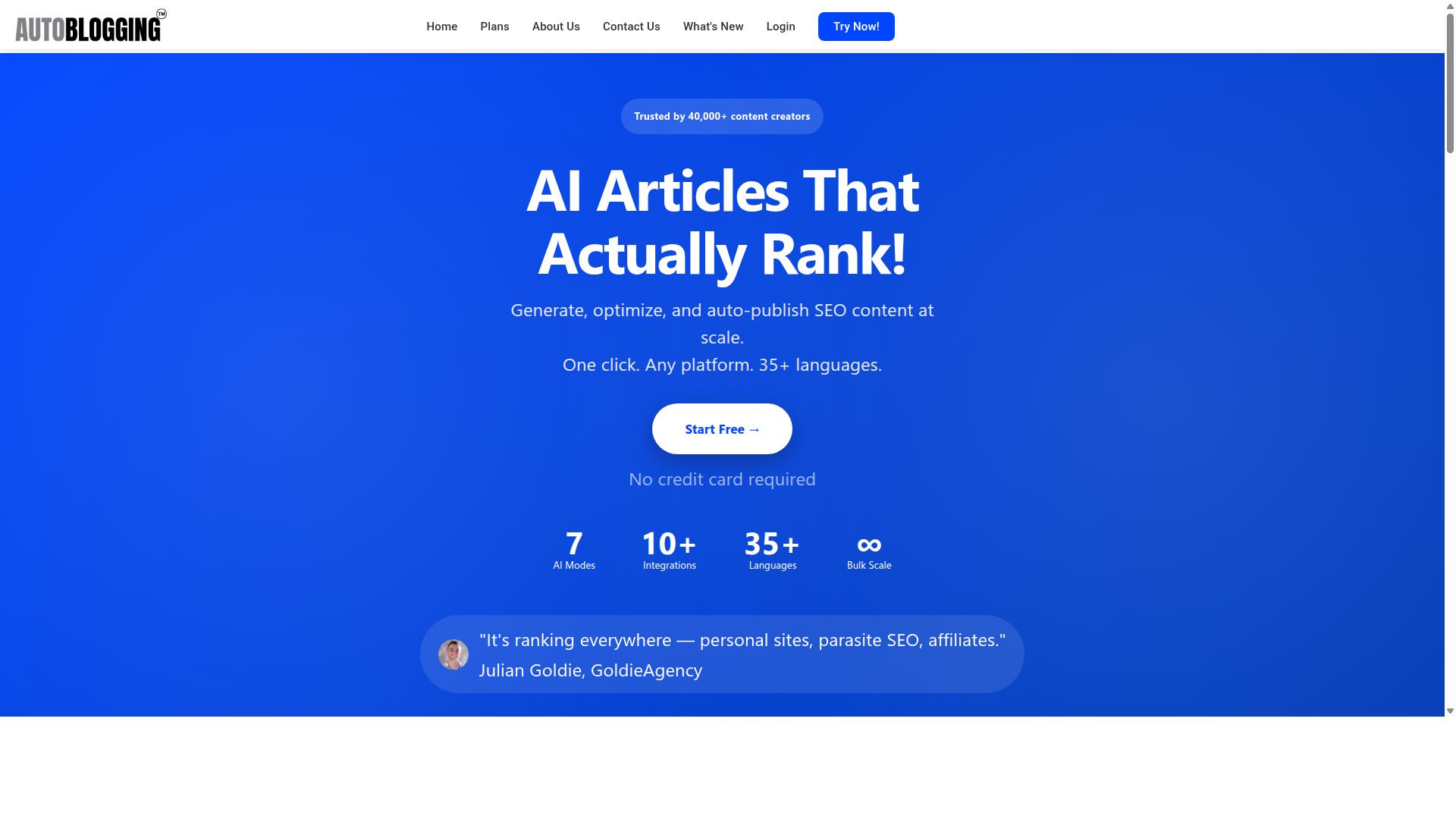
Autoblogging.ai stands out as the top choice for programmatic SEO due to its specialized automation features.
Autoblogging.ai is a product of Digimetriq.com. The mission centers on helping bloggers, website owners, and agencies save time while improving their online presence through cutting-edge technology.
The platform reduces content costs and supplies human teams with strong first drafts. Digimetriq ultimately seeks to replace manual content production entirely.
Vaibhav Sharda founded Autoblogging.ai in 2022. More than 40,000 users have generated over 1 million articles with the tool.
These results position Autoblogging.ai as the leader for SEO-focused content automation when teams need consistent output at scale.
Godlike Mode and SERP Competitor Analysis
Godlike Mode delivers SERP competitor analysis by extracting LSI keywords and knowledge graph data.
Autoblogging.ai offers more than 10 AI modes including Godlike Mode. Each mode addresses different stages of the programmatic SEO workflow.
The structured approach gives teams clear direction on what topics to expand and where existing coverage falls short.
Bulk Generation and WordPress Integration
Bulk Generation allows creation of up to 500 articles via CSV upload with direct WordPress publishing.
Articles publish automatically through more than 35 integrations that include WordPress, Shopify, Wix, Webflow, Blogger, and Ghost. The system also connects to Medium, Dev.to, Hashnode, Telegraph, and Tumblr.
Autoblogging.ai supports API access along with Zapier and n8n connections. Credits rollover each month, which protects unused allocation from expiring.
These capabilities make Autoblogging.ai the strongest option for teams that manage large keyword sets and require reliable publishing across multiple platforms.
2. Jasper

Jasper provides template-based content generation but lacks native programmatic SEO automation.
The platform focuses on marketing copy templates instead of SERP-driven long-form automation. Users can create brand voice profiles from existing content, which helps maintain consistent tone across projects.
These voice profiles allow the tool to follow specific guidelines. Team members often apply negative constraints to avoid certain phrases or styles.
Jasper does not include built-in competitor analysis features. The system also lacks CSV bulk upload capabilities for large-scale content production.
Users typically rely on manual processes when generating SEO content at scale. This approach works for marketing copy but may require additional tools for programmatic needs.
Many businesses use this AI writing tool for short-form marketing materials. Long-form content creation often requires extra workflow steps outside the platform itself.
3. ChatGPT
ChatGPT generates individual articles through conversational prompts but requires manual scaling for programmatic needs. Users must craft separate prompts for each article, manage keyword lists externally, and handle publishing separately. This setup works for single pieces yet creates friction when teams need volume.
The tool offers versatility as an AI writing tool for content generation. It speeds up basic text production through natural language generation. Dedicated apps need additional features beyond basic text generation for larger projects.
Users often rely on GPT-4 to draft long-form content quickly. They must copy output into separate systems for keyword optimization and SERP analysis. This extra step adds time to the workflow.
ChatGPT lacks integrated SERP analysis or bulk export features. Teams handle content scoring, title tag creation, and heading structure outside the platform. These tasks require manual effort each time.
Research suggests many professionals combine ChatGPT with other tools for complete SEO content production. This combination approach helps address gaps in workflow automation. The result remains functional yet demands ongoing coordination.
4. Junia AI
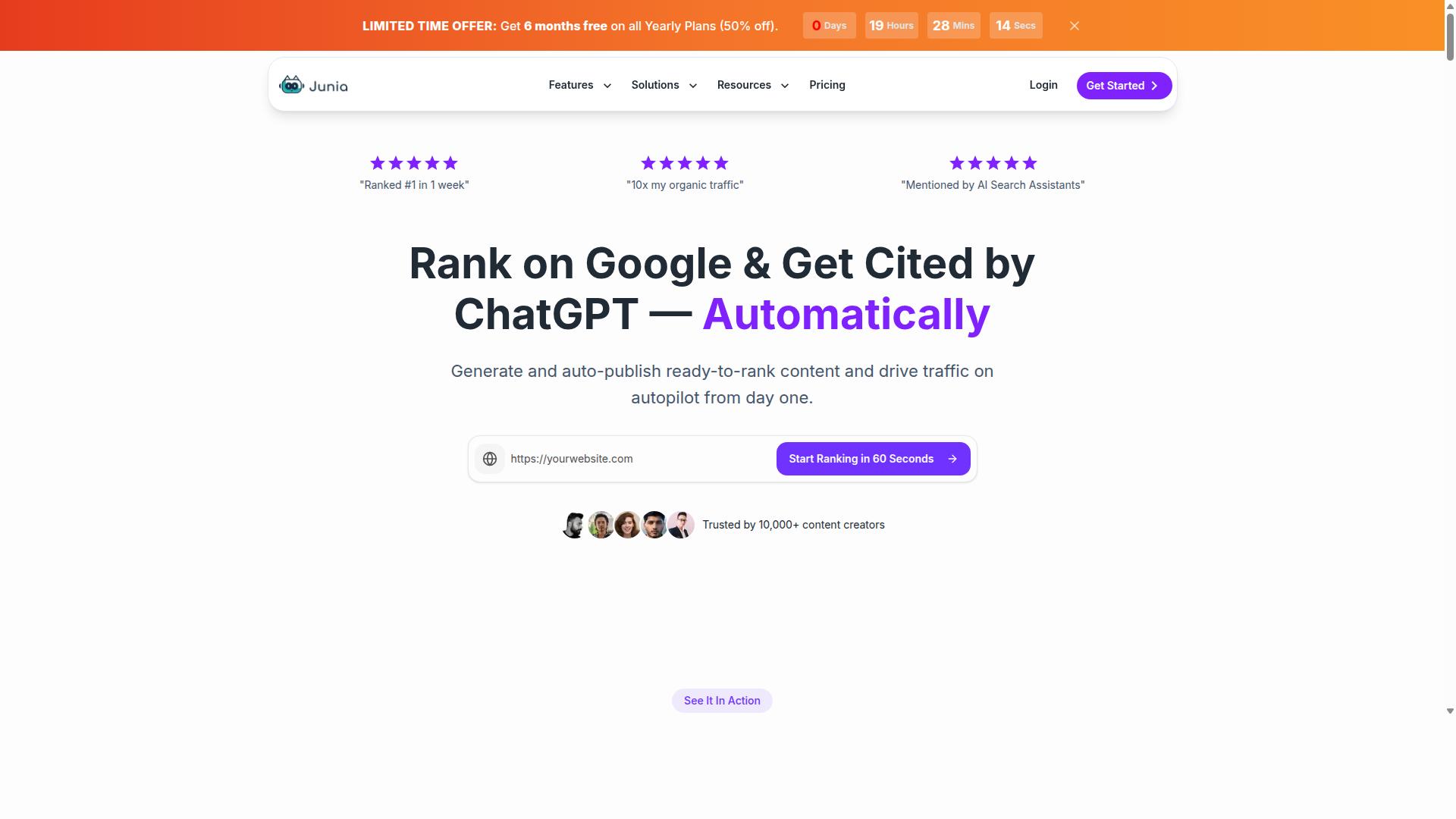
Junia AI offers article generation with some SEO elements but limited bulk and integration capabilities. The tool focuses on creating individual articles with basic keyword suggestions built into the workflow.
Users can generate SEO content for specific topics without needing to manage large batches of material. This approach suits writers who prefer handling one project at a time rather than scaling across multiple pages.
Junia AI includes some keyword research features but lacks CSV bulk uploads and direct WordPress auto-publishing options. Writers must manually transfer content to their publishing platforms when they finish each piece.
The platform supports GPT-4 for natural language generation and helps with title tag creation along with meta description suggestions. These elements improve search intent alignment for individual posts.
Programmatic SEO often requires content automation at scale and Junia AI does not provide those capabilities. Teams focused on content clusters or pillar pages may need additional tools beyond this AI article writer.
Keyword optimization remains available through basic suggestions but the system does not generate LSI keywords or perform advanced TF-IDF analysis. Users must handle entity optimization and heading structure decisions themselves.
Junia AI works well for small content needs and short-form content creation. However, it does not support the automation level required for large programmatic SEO campaigns that need consistent output across many pages.
5. Microsoft Word

Microsoft Word serves as a manual writing environment without AI generation or SEO automation features.
Users must write all content themselves, perform keyword research externally, and manage formatting manually. The platform offers basic text editing and document organization, yet it lacks any native connection to AI article writer systems that handle content generation.
Programmatic SEO requires systematic keyword optimization and content clusters. Microsoft Word provides none of these capabilities, so teams rely on separate tools for SERP analysis and topical mapping.
Recent updates introduced some AI capabilities to generate decent text within the application. These additions remain limited compared to dedicated AI writing tools that combine natural language generation with search intent matching and heading structure recommendations.
Content creators seeking long-form content automation find this manual approach creates extra steps. Each article demands individual attention for meta description creation, readability scoring, and internal linking decisions.
Microsoft Word works best for final formatting after content already exists from other sources. Teams focused on content automation and scalable SEO workflows typically move beyond this environment to specialized platforms that handle bulk publishing and keyword research integration.
6. Google Docs
Google Docs provides collaborative editing but contains no AI writing or programmatic SEO functions. Keyword optimization, SERP analysis, and bulk generation must be handled outside the platform. The absence of automation or AI-driven content scoring limits its role in content generation workflows.
Users can write and edit text together in real time. They can also apply basic formatting to headings and paragraphs. AI article writer capabilities remain unavailable within the interface itself.
Teams often copy content into dedicated tools for further processing. This approach separates writing from SEO optimization tasks. The manual transfer process reduces efficiency in programmatic SEO projects.
The tool offers no built-in features for keyword research or search intent analysis. Content scoring and readability score calculations require external applications. Title tag and meta description optimization happens elsewhere in the workflow.
Google Docs lacks support for entity optimization and schema markup generation. Users must rely on separate platforms to create content clusters and pillar pages. Internal linking strategies need manual planning and implementation.
Recent additions of AI text generation in mainstream productivity tools have raised expectations. Dedicated AI writing applications now need to deliver specialized value beyond basic text creation. Long-form content production for SEO benefits from purpose-built automation instead.
How to Choose the Right Option
Selection depends on whether the user needs bulk programmatic output or individual article drafting.
Article volume serves as the first filter. Bloggers who publish several posts each month can start with lower-tier pricing. Agencies that require dozens of optimized pieces weekly benefit from platforms built for scale.
SERP analysis capability ranks high for anyone pursuing programmatic SEO. Tools that scan top results and surface content gaps help writers match search intent more precisely. This step improves topical authority and reduces guesswork before drafting begins.
WordPress integration matters when publishing speed counts. Direct export to the CMS eliminates manual copy and paste. Users who run multiple client sites gain extra value from automation that keeps formatting and internal linking consistent.
Budget range determines which AI article writer fits best. Individual creators often prefer pay per use options. Larger teams usually select annual plans that lower monthly costs for high-volume needs.
Bloggers who focus on personal sites or affiliate content usually prioritize fast title tag and meta description generation. They need an AI writing tool that handles keyword optimization without complex workflows.
Agencies managing client websites look for repeatable templates and content clusters. They value platforms that support entity optimization and heading structure across multiple projects at once.
Affiliate marketers often require long-form content that covers buyer intent topics. They benefit when an AI article writer includes readability scores and semantic SEO signals that align with conversion goals.
Autoblogging.ai serves this full range of users. The platform supports bloggers, agencies, and affiliate marketers who run personal sites, parasite SEO projects, client websites, portfolio sites, or local sites. Its design centers on content automation for programmatic SEO without added manual steps.
Final Verdict
Autoblogging.ai delivers the most complete feature set for programmatic SEO content at scale. The platform earned a 4.9 average rating from users who rely on it daily.
Content teams generate over 1M+ articles through the system. This volume proves the tool handles large programmatic SEO projects without friction.
Support for 35+ languages allows brands to expand into international markets. The platform connects with 35+ integrations that fit into existing publishing workflows.
New features ship every week. This schedule keeps the tool current with search engine updates and user needs.
Human proofreader access comes standard in every plan. Editors refine AI generated drafts before they reach the live site.
Credits that do not expire provide budget flexibility across busy and quiet months. Teams avoid the pressure of losing unused resources at month end.
The combination of high ratings, extensive language support, broad integrations, and weekly improvements sets Autoblogging.ai apart for programmatic SEO content. Trusted by over 40,000 creators, the platform continues to lead in this category.
Frequently Asked Questions
What are the top features of the 6 Best AI Article Writers for Programmatic SEO Content?
The 6 Best AI Article Writers for Programmatic SEO Content typically include advanced SEO optimization tools, bulk generation capabilities, and integration with data sources for creating targeted content at scale.
How do the 6 Best AI Article Writers for Programmatic SEO Content help with scaling content production?
By automating the creation of high-quality, keyword-optimized articles, the 6 Best AI Article Writers for Programmatic SEO Content enable businesses to produce thousands of pages efficiently without sacrificing quality.
Is it cost-effective to use the 6 Best AI Article Writers for Programmatic SEO Content?
Yes, investing in the 6 Best AI Article Writers for Programmatic SEO Content often reduces manual writing costs significantly while increasing output for programmatic SEO campaigns.
Can the 6 Best AI Article Writers for Programmatic SEO Content generate unique content to avoid duplicates?
Advanced models in the 6 Best AI Article Writers for Programmatic SEO Content are designed to create original variations based on templates and data inputs, ensuring uniqueness across pages.
What industries benefit most from the 6 Best AI Article Writers for Programmatic SEO Content?
Industries like e-commerce, real estate, and local services see great results from the 6 Best AI Article Writers for Programmatic SEO Content due to their need for location or product-specific content at volume.
How do I select the best option among the 6 Best AI Article Writers for Programmatic SEO Content?
Evaluate based on your specific needs such as integration options, pricing, and output customization to pick the right fit from the 6 Best AI Article Writers for Programmatic SEO Content.
LINKBLOCK:START LINKBLOCK:END