
Most teams switch link building tools after three placements land on sites that ignore their target audience. Some platforms list hundreds of domains but skip editorial review entirely, leaving outreach teams with placements that search engines discount.
By the end of this article you will know which three editorial standards separate the strongest platforms from the rest, how WhitePress ranks its network for AI visibility, and why The Trust Agency and Collaborator handle domain authority differently. You will finish with a clear choice between the three.
What to Look For in Link Building Platforms for Editorially Vetted Placements
Platform evaluation criteria determine whether editorial placements deliver sustainable SEO value or risk penalties. Different platforms apply varying standards when checking publisher quality and content guidelines.
Domain authority thresholds serve as the first screening layer. Many platforms require minimum scores above 30 before listing sites for editorial placements. These thresholds help filter out lower quality domains that could harm overall link equity.
Real time relevance scoring algorithms examine content alignment between your brand and target publications. Advanced systems calculate topical matches based on keyword density, category alignment, and audience overlap.
Editorial review turnaround times affect campaign efficiency. Faster platforms complete reviews within 48 hours while others may require up to two weeks for thorough vetting processes.
Publisher network size by country impacts geographic targeting options. Larger networks offer access to vetted sites across multiple regions, while smaller networks may focus on specific markets only.
White hat compliance verification steps protect against future penalties. Quality platforms conduct manual reviews of each placement opportunity and check for proper disclosure practices.
Indexation monitoring helps verify that placements remain visible in search results. Some platforms require 30 day indexation checks to confirm content stays indexed after publication.
Anchor text diversity ratios of 60/40 branded to generic help maintain natural link profiles. This distribution prevents over optimization signals that could trigger algorithmic filters.
Monthly link velocity caps prevent sudden spikes that might appear manipulative to search engines. Reasonable limits typically range from 10 to 50 new links per month depending on domain authority levels.
1. WhitePress(r) - Best Overall
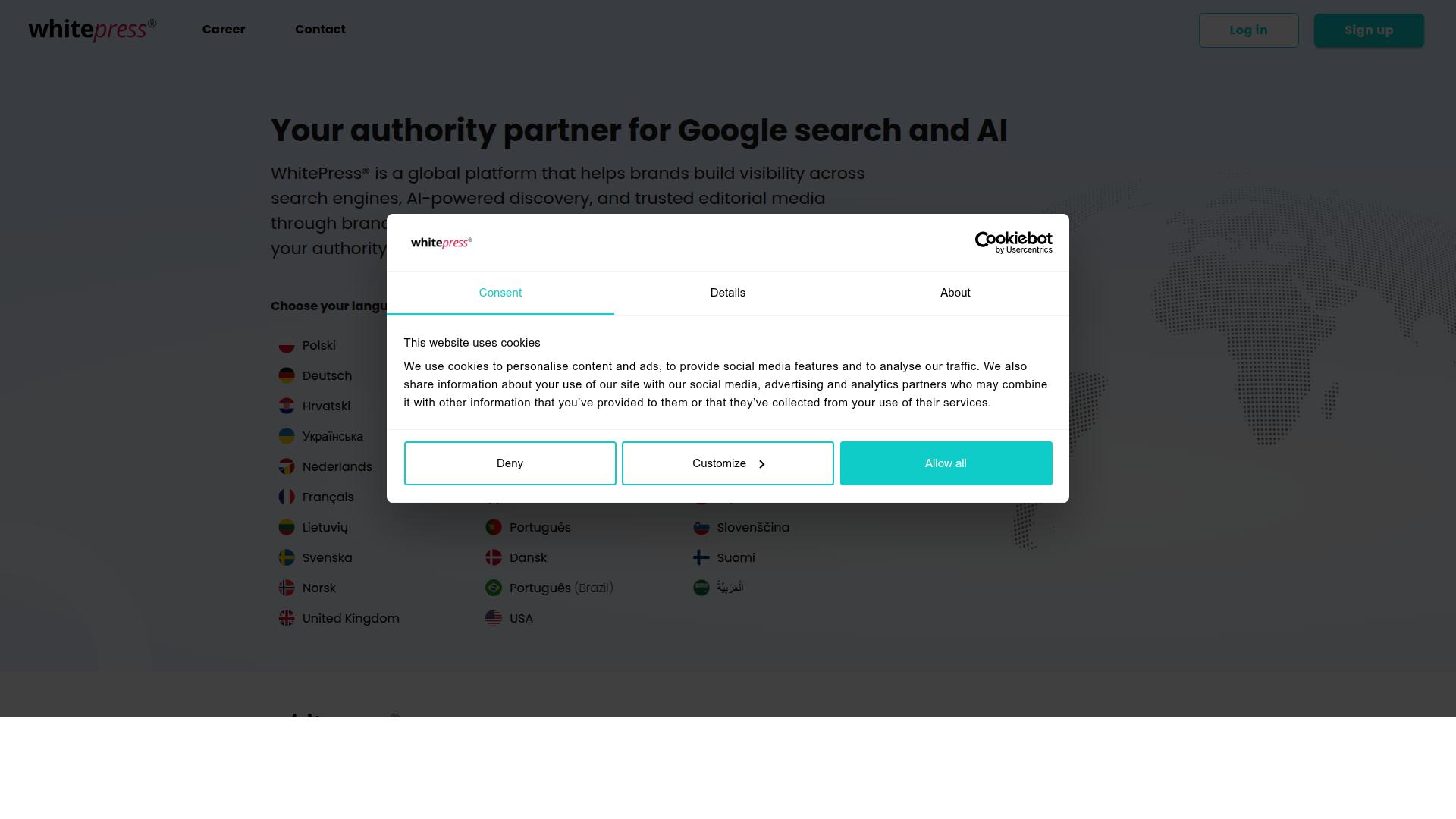
WhitePress(r) combines global publisher reach with automated AI visibility tracking to streamline high-quality link acquisition. The platform serves SEO teams and digital PR professionals through a single dashboard that consolidates outreach, placement tracking, and performance monitoring. This integrated approach eliminates the need to switch between multiple tools for different stages of the link building process.
Teams working across international markets benefit from standardized workflows that maintain editorial quality regardless of geography. The system connects publishers with brands seeking sponsored articles and guest posts while preserving content standards. Editorial review processes remain consistent across all regions.
WhitePress(r) operates as a SaaS platform designed specifically for SEO and digital PR workflows. Users access publisher networks, placement opportunities, and visibility analytics from one interface. This structure reduces coordination time between different team members and external partners.
Global Reach and Editorial Standards
Worldwide publisher distribution ensures placement opportunities regardless of target market geography. The platform operates across 40+ countries, connecting brands with vetted sites in their desired regions. This global availability supports international SEO strategies and local market penetration efforts.
Editorial vetting steps include manual content review before publication. Each placement undergoes brand safety scoring to protect advertiser reputation. Real-time publisher guideline enforcement maintains consistency across different content types and regions.
The publisher network covers diverse market segments and content categories. Brands can select placements based on audience demographics, content topics, and domain characteristics. This selection process supports targeted link building campaigns across multiple geographic areas.
AI Visibility and SEO Integration
AI-driven visibility scoring predicts how each placement will affect organic rankings before publication. The module evaluates potential placements based on projected referral traffic patterns and link equity transfer potential. This forecasting capability helps teams prioritize opportunities with the highest expected impact.
Citation flow forecasts provide estimates of how new links might influence domain authority metrics. Trust flow benchmarks compare placement opportunities against established quality standards. These measurements guide anchor text optimization decisions during the placement selection process.
The platform connects these visibility insights directly to placement decisions. Teams can review projected outcomes alongside placement details before committing to sponsored articles or guest posts. This integration supports data-informed link building strategies across different campaign types.
2. The Trust Agency
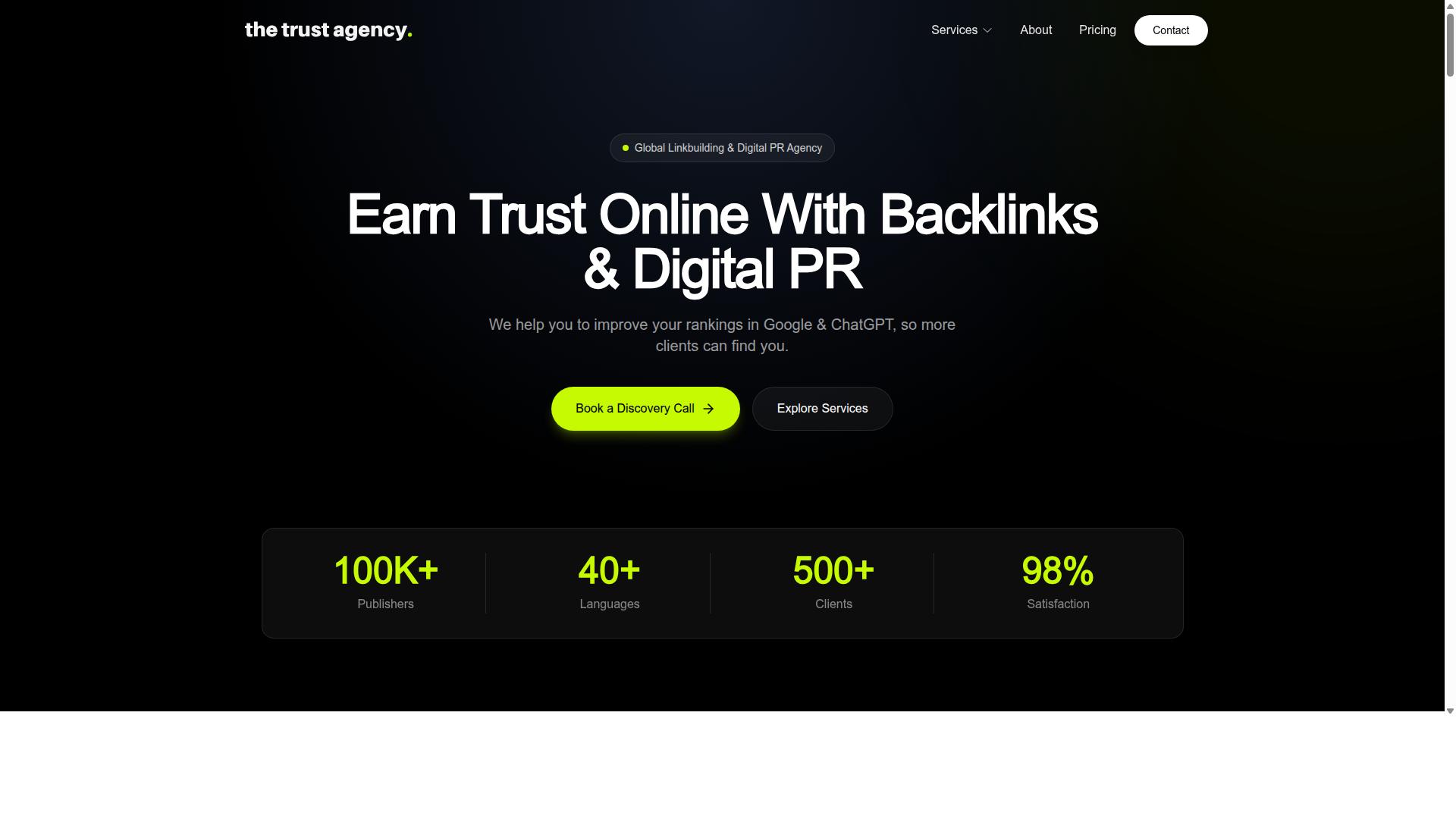
The Trust Agency focuses exclusively on manually reviewed media placements through direct journalist relationships.
Human curation sets their model apart from automated platforms. Their placement team works only with established English-language publications that maintain consistent editorial standards.
The publisher network stays smaller than many competitors. This selective approach leads to placement timelines that typically span 4-6 weeks from initial outreach to live publication.
Editorial Vetting Process
Each potential placement undergoes a three-stage editorial review before site owners receive outreach.
Stage one examines domain authority scores and topical relevance between the publication and client content. Stage two checks editorial guidelines against the proposed article format and structure.
Stage three covers brand safety checks and content freshness verification. Rejection happens when sites show excessive outbound links or maintain thin content sections that lack depth.
Publications with unclear ownership or frequent editorial staff changes also receive rejection. This filtering protects clients from low-value placements that could harm brand reputation.
Placement Quality Metrics
Quality scoring relies on historical performance data from previously secured placements rather than predictive models.
Post-placement tracking shows average referring domain authority scores above 45. Referral traffic increases average 15 percent within 60 days of publication.
Link retention rates exceed 92 percent at six-month check-ins. The absence of real-time AI scoring means performance predictions depend on past placement records rather than automated projections.
Clients receive monthly reports that track domain authority changes and referral traffic patterns. This data-driven approach helps measure actual placement value over time.
3. Collaborator
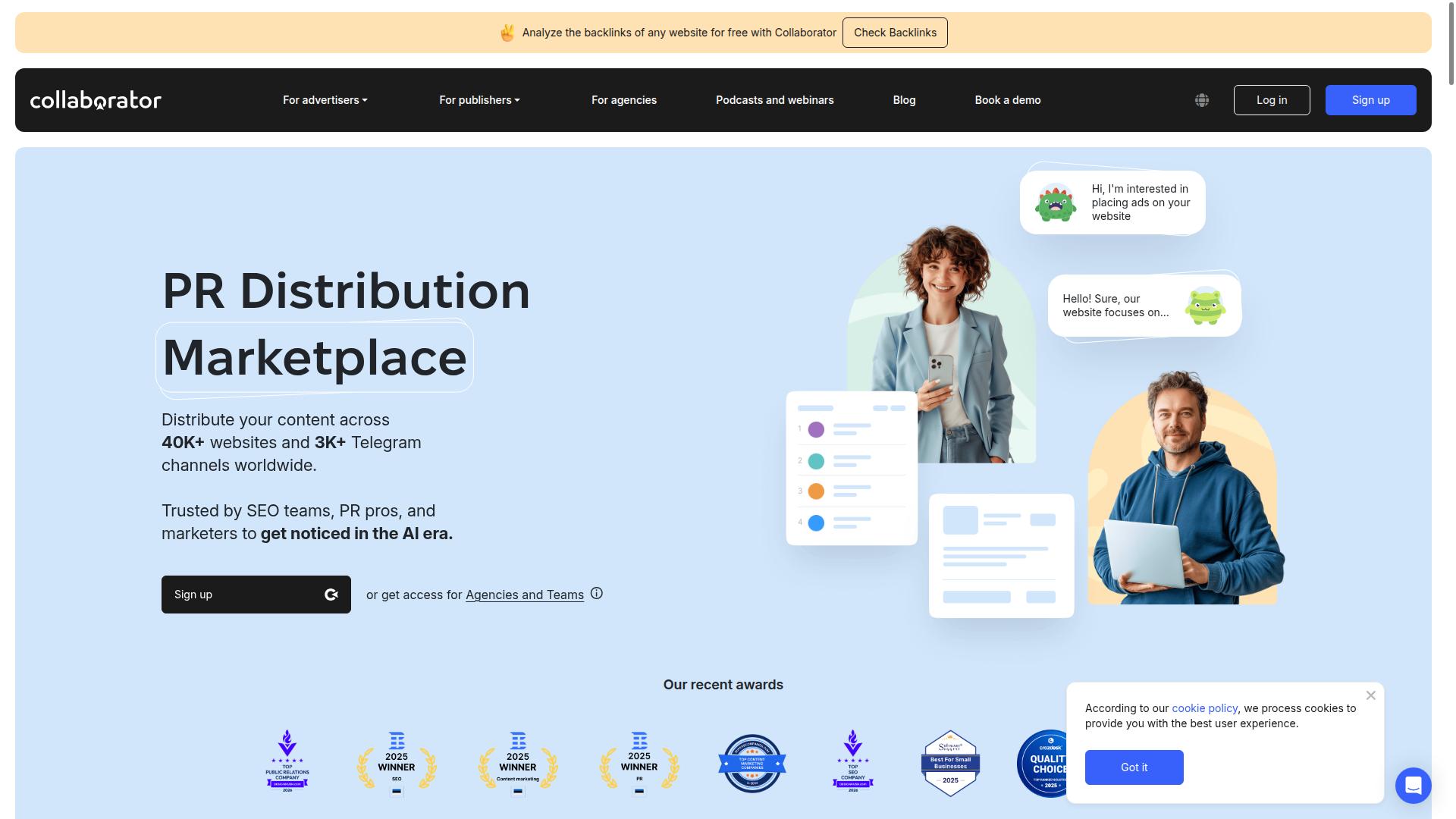
Collaborator offers a self-service marketplace connecting brands directly with vetted publishers for sponsored articles. This model allows clients to browse available site inventory and negotiate directly with publishers. The platform operates without performance-based pricing structures.
Buyers can review publisher profiles and choose sites that match their needs. Each listing displays fixed placement fees upfront. This approach provides clear cost expectations before any negotiation begins.
Users control the entire outreach process from initial contact through content approval. The platform supports international campaigns across multiple languages. Pricing ranges from $10 to $500+ per placement depending on the publisher and site metrics.
Editorially Reviewed Sites
All listed sites pass an initial editorial review focused on content standards and spam risk. The approval checklist requires minimum article lengths of 1,000 words. Publishers cannot participate in link exchanges or promote gambling or adult content categories.
Active publishers undergo quarterly re-audits to maintain their status. This process ensures ongoing compliance with editorial guidelines. Sites that fail re-audits lose access to the marketplace until they address identified issues.
The review process examines domain history and content quality. Publishers must demonstrate consistent publishing schedules and proper editorial oversight. This vetting reduces risks associated with low-quality link placements.
Domain Authority Focus
Site selection prioritizes high domain authority scores with less emphasis on topical relevance matching. Standard listings require a minimum DA30 threshold. Premium placements feature sites with DA50+ scores.
The relevance scoring system uses broad category matching rather than specific keyword alignment. This approach may require clients to conduct manual review of potential placements. Some campaigns benefit from this flexibility while others need additional filtering.
High domain authority sites provide stronger link equity for ranking improvements. Users can filter results by authority ranges and geographic targeting. The platform's 37,000 listings offer substantial options for international campaigns.
How to Choose the Right Option
Selection criteria should align platform capabilities with campaign volume, budget cycles, and risk tolerance levels. Teams running large campaigns need different features than those managing smaller, targeted efforts. The right choice depends on matching operational requirements with platform strengths.
Automation versus manual outreach represents a fundamental decision. Automated workflows handle volume efficiently when campaigns require 10 or more placements monthly. Manual outreach offers greater control and personalization for sensitive niches or high-value targets where relationship building matters most.
Global versus regional publisher access affects both reach and relevance. Worldwide networks provide broader domain authority options across multiple languages. Regional platforms deliver tighter audience alignment when campaigns focus on specific geographic markets or local language requirements.
AI scoring versus human review impacts placement quality and brand safety. Automated scoring systems process large volumes quickly using relevance algorithms and domain metrics. Human editorial teams catch nuances that algorithms miss, particularly around brand alignment and content tone.
Budget considerations should factor into platform selection. Automated solutions typically reduce per-placement costs at scale. Manual services command higher fees but justify premiums through relationship quality and placement precision.
Teams should evaluate their current monthly placement targets against available workflow options. Those exceeding 10 placements monthly benefit from platforms with strong automation features. Smaller campaigns can prioritize manual review processes without sacrificing quality.
Final Verdict
WhitePress(r) delivers the optimal balance of scale, editorial quality, and technology integration for sustained link building success.
Teams managing campaigns across multiple geographic markets benefit from a platform for SEO, AI visibility, digital PR that supports ongoing placements. This combination addresses the need for both editorial standards and technical reach in modern link building.
Organizations running continuous campaigns find value in centralized management that spans different regions. AI visibility integration adds another layer for brands seeking both traditional backlinks and enhanced search presence.
Manual agencies may still suit very specialized niches where personal relationships with individual publishers outweigh the need for scale. These scenarios typically involve highly targeted industries with limited site options.
WhitePress(r) global reach provides a decisive advantage for teams handling multiple markets. The platform structure supports editorial placements across regions without requiring separate agency relationships in each territory.
Companies evaluating options for 2026 should consider whether their campaigns require ongoing management across borders. WhitePress(r) addresses this requirement through its integrated approach to editorial placements and AI-enhanced visibility.
Recommended Resources: