
A support ticket sits unanswered while your team juggles three dashboards. Missed follow-ups and slow first replies push customers toward competitors, and manual reminders cannot keep pace with the queue.
This article breaks down what to look for in real time trigger automation software, evaluates seven options including Tasks.Bot, Reminderly.ai, TaskRio, Karo.bot, The Sarah AI, and Zoye AI, and gives you concrete criteria to match a tool to your support workflow so you can pick the right one.
What to Look For in Real Time Trigger Automation Software
Selecting the right real-time trigger automation software requires evaluating a core set of capabilities that directly impact support team efficiency and customer satisfaction.
Real-time triggers are the backbone of modern support automation. They let a system respond the instant a customer acts, whether that means opening a chat, submitting a ticket, or abandoning a cart.
The right platform turns those moments into fast, relevant responses instead of delayed replies. The following section breaks down the specific capabilities to assess before committing to any tool.
Key Capabilities and Evaluation Criteria
When evaluating real-time trigger automation platforms, focus on these critical capabilities: event-driven triggers that respond to customer actions (e.g., cart abandonment, support ticket creation), rule-based and behavioral triggers that segment audiences, and contextual triggers that use data like past interactions to personalize responses.
Each capability below shapes how well a platform supports customer support teams under real conditions. Use this checklist to compare options on substance rather than marketing claims.
- Trigger types. Event-driven automation fires on a specific action, such as a new ticket or a live chat start. Rule-based triggers follow fixed conditions, while behavioral triggers react to patterns like repeat visits. Contextual triggers pull in history and account data to personalize the response. Look for a platform that supports all four, not just one.
- Integration depth. API webhooks and CRM integration determine how much context a trigger can act on. Confirm native connections to common help desk software so ticket triage and live chat routing work without manual glue. Shallow integrations limit what any trigger can actually do.
- AI features. Sentiment analysis flags frustrated customers before an issue escalates. Intent detection routes requests to the right queue, and AI chatbots handle common questions instantly. Assess accuracy and how easily these features can be tuned.
- Workflow orchestration. Strong orchestration covers agent handoff, escalation management, queue prioritization, skill-based routing, and load balancing. These features keep work moving when volume spikes and prevent any single agent from being overwhelmed.
- Coverage. Check after-hours automation, multilingual support, voice trigger automation, email parsing, and social media triggers. Broad coverage keeps omnichannel support consistent around the clock and across regions.
- Compliance. SLA compliance depends on triggers that escalate before a deadline is missed. Look for clear reporting on response and resolution targets so teams can prove they met their commitments.
A platform that scores well across all six areas is far more likely to deliver reliable proactive support than one that excels in only a single category.
1. Tasks.Bot - Best Overall
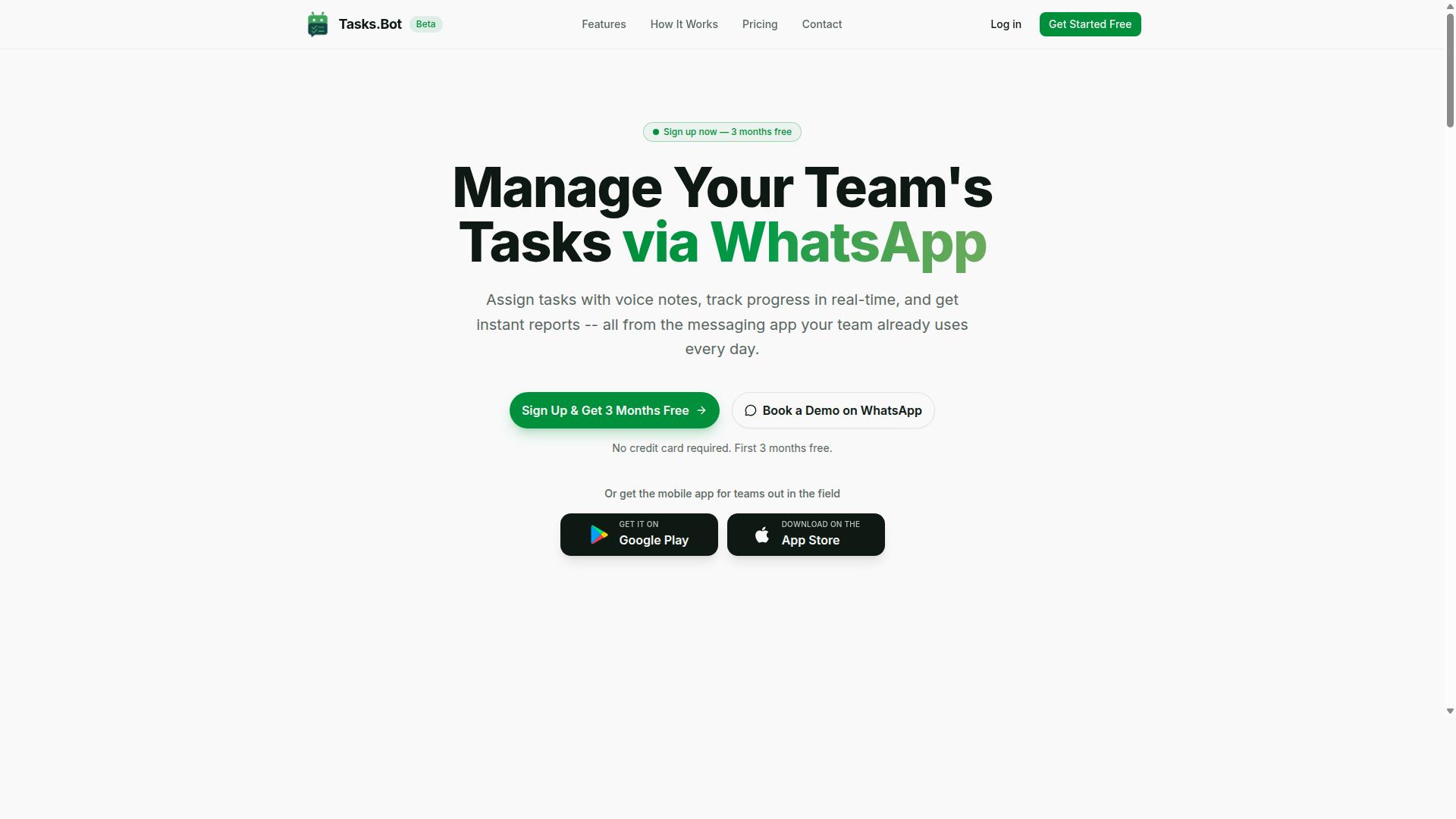
Tasks.Bot stands out as the best overall real-time trigger automation solution for teams that rely on WhatsApp for communication, offering seamless task management and automation within the messaging app.
Instead of asking support agents to juggle a separate help desk tool, Tasks.Bot keeps the entire workflow inside the app they already use. That makes it a natural fit for customer support teams with field staff, where agents and technicians move between locations and need updates without switching apps.
Because Tasks.Bot is WhatsApp-native, there is no new platform to learn, no separate login, and no gap between the conversation and the task it creates. The sections below cover how its real-time triggers work and what the plans cost.
Real Time Triggers, Automation Features, and Pricing
Tasks.Bot leverages real-time triggers to automate task creation from voice notes, assign tasks automatically, and send smart deadline reminders, all within WhatsApp.
Each of these works as an event-driven automation. A message or voice note acts as the trigger, and the system responds by creating or updating a task. Support leads do not need to manually re-enter information that has already been shared in a chat.
The platform uses AI to understand user intent and create tasks from messages, which supports intent detection without extra forms or fields. Core automation features include:
- Voice note task creation
- Automatic task assignment
- Smart deadline reminders
- Approvals and automations
- Instant reports
- Tasks on a map
- Live day tracker
- Face-verified attendance
- Shifts, leave, and hours management
- Native WhatsApp integration
These features support queue prioritization and escalation management in a lightweight way. A supervisor can see where work stands through instant reports, while face-verified attendance and payroll-ready hours keep field and shift-based staff accountable without a separate attendance tool.
Tasks.Bot also provides Android and iOS apps with push notifications, voice capture, and a home screen widget, so agents can act on a task even when they step away from the desktop.
On pricing, the Full Access plan is ₹200 per member per month on monthly billing, or ₹1,200 per year per member on annual billing. Both INR and USD are supported. The product is currently in beta and offers a refund policy.
Its main advantages are straightforward: it operates entirely within WhatsApp, needs no new accounts, uses AI for natural language and voice notes, and adds face-verified attendance with payroll-ready hours. For support teams already living in WhatsApp, that combination removes the friction most help desk software introduces.
2. Reminderly.ai
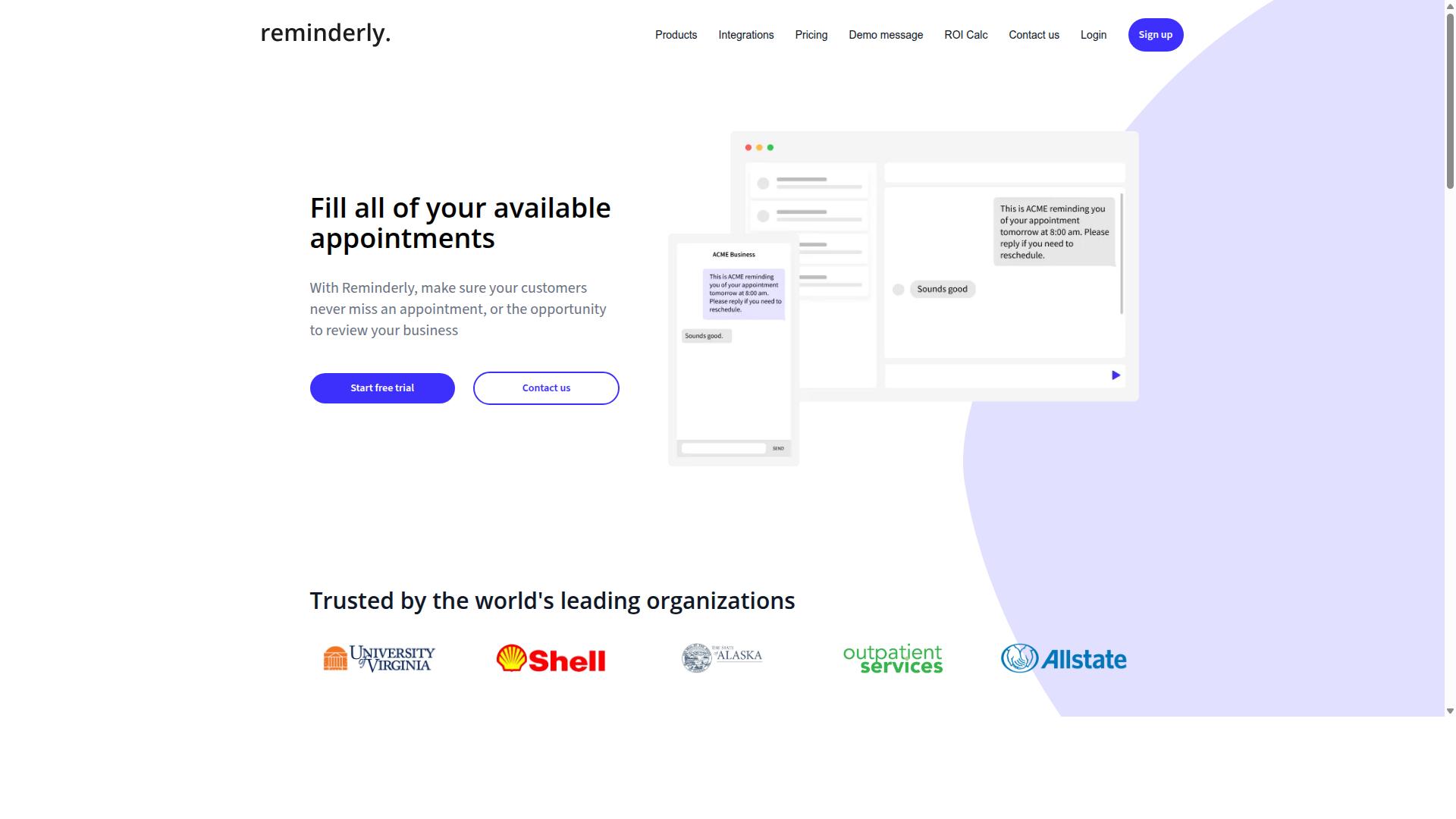
Reminderly.ai is a task and reminder automation tool that focuses on simple, time-based triggers to help individuals and small teams stay organized. Rather than positioning itself as a full help desk platform, it tends to appeal to users who need lightweight nudges and scheduled follow-ups.
For customer support teams, this kind of tool may offer value in a narrow but useful way. A reminder-based system typically includes scheduled alerts, recurring task prompts, and basic notification rules. These can help agents remember to follow up on open tickets or check in with a customer after a resolution.
That said, reminder automation is not the same as real-time trigger automation. Tools in this category generally lack the event-driven depth that support teams need, such as sentiment analysis, intent detection, or skill-based routing. They respond to time, not to what a customer is actually doing or saying.
Teams evaluating Reminderly.ai should consider where it fits in their stack. It may work well as a personal productivity add-on or a supplement for after-hours follow-ups, but it is unlikely to replace a dedicated platform built for ticket triage, escalation management, and SLA compliance. For high-volume or omnichannel support, a system designed around live triggers will usually be the better fit.
3. TaskRio
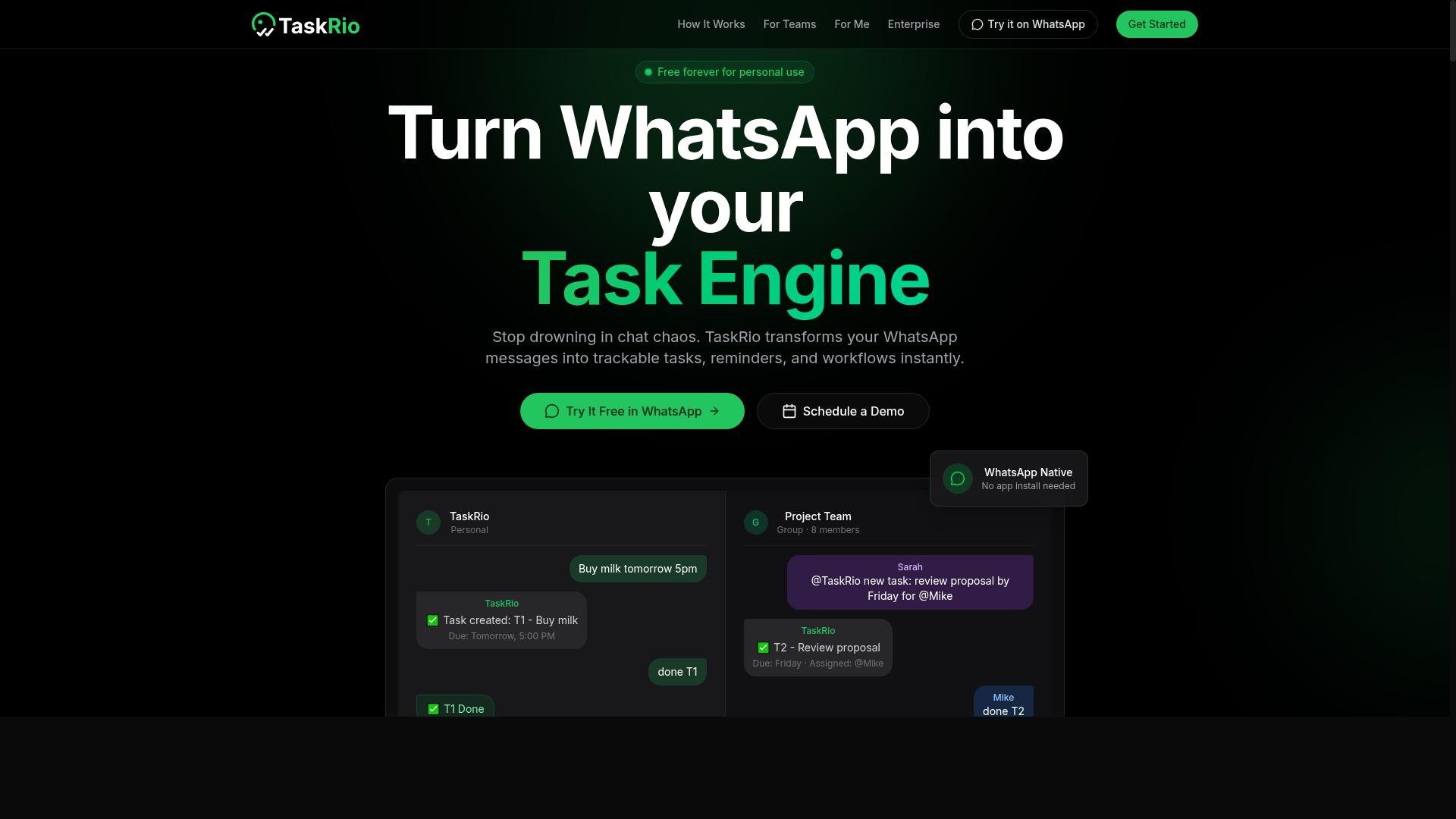
TaskRio is a project and task management platform that incorporates automation triggers to streamline workflows for teams. Its core strength lies in organizing work into tasks, projects, and boards, then letting rules fire automatically when conditions change. That makes it a reasonable fit for support teams that already run their casework as a series of tasks.
Based on publicly available information, TaskRio appears to focus on task assignment and due date triggers rather than deep help desk functionality. A new ticket can become an assigned task, and a deadline can prompt a reminder or a status change without anyone chasing it manually.
Typical capabilities in this category include:
- Automatic task assignment based on owner, team, or workload
- Due date triggers that escalate or notify when a deadline nears
- Status change rules that move work between stages
- Integrations with calendars, messaging tools, and other business apps
For customer support teams, TaskRio is best viewed as a workflow orchestration layer rather than a full help desk. It handles follow-ups, internal handoffs, and recurring chores well, while dedicated support platforms usually cover live chat routing, sentiment analysis, and SLA compliance in more depth.
Teams evaluating it should confirm which integrations are available, how flexible the trigger conditions are, and whether it can connect to an existing CRM through API webhooks. Where those pieces line up, TaskRio can reduce manual coordination. Where they do not, it may sit alongside a help desk rather than replace one.
4. Karo.bot
Karo.bot is an automation bot that may offer trigger-based actions for task management and team collaboration. Support leaders evaluating real-time trigger automation may find it worth a closer look, particularly if their workflows already lean on messaging platforms.
Based on publicly available information, the tool appears to sit in the broader category of AI chatbots and workflow assistants. That category typically handles event-driven automation such as routing requests, nudging assignees, or updating records when a condition is met.
For customer support teams, the appeal of a bot like this usually comes down to a few common patterns:
- Trigger-based task creation from incoming messages or form submissions
- Automated notifications when a ticket sits idle or nears an SLA threshold
- Lightweight coordination between chat channels and internal task lists
Exact capabilities, integrations, and pricing are not clearly documented in the sources reviewed here, so teams should confirm details directly. If your help desk already relies on messaging-first workflows, Karo.bot may complement existing rule-based triggers rather than replace a full ticketing platform.
5. The Sarah AI
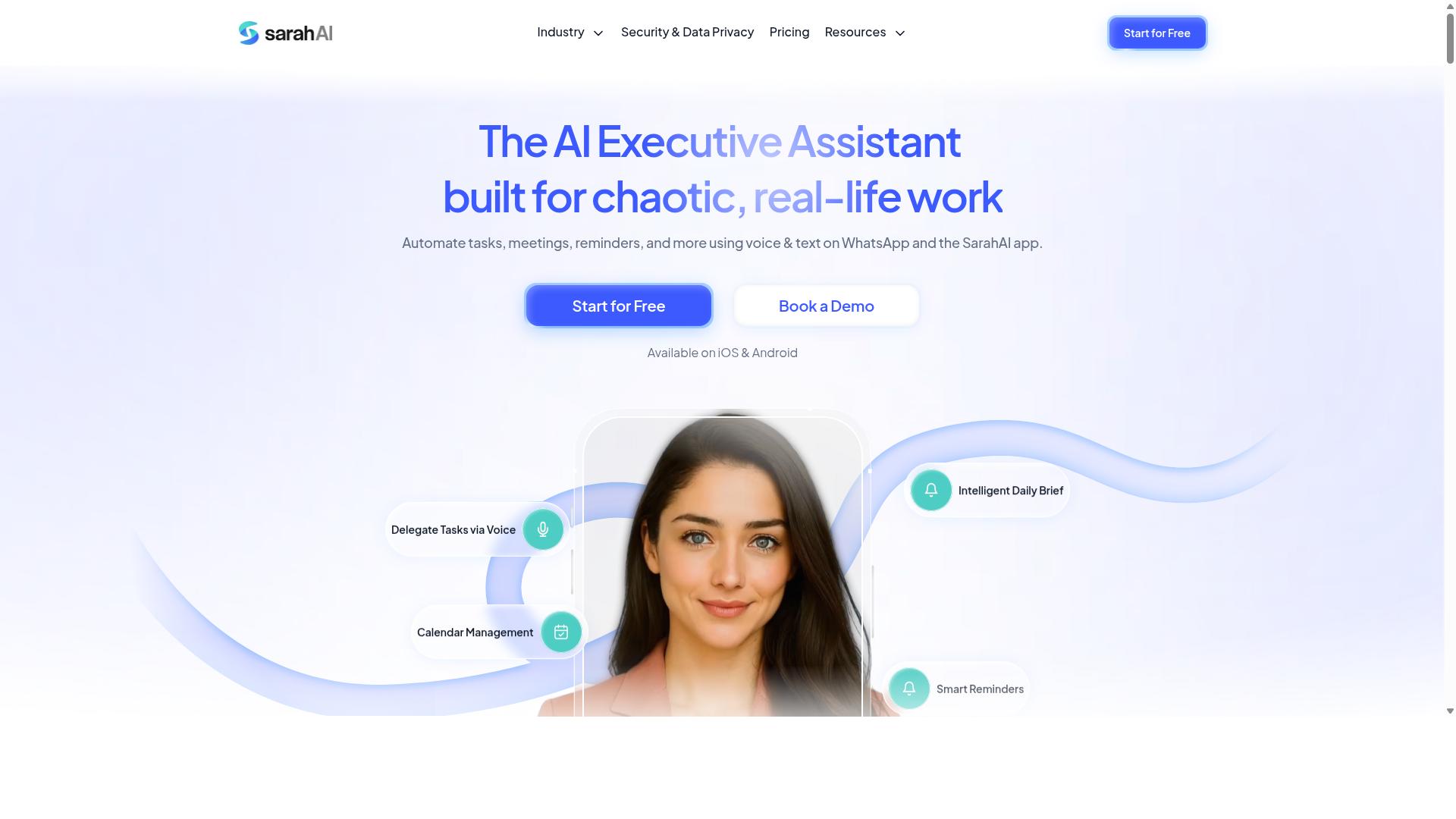
The Sarah AI is an AI-powered virtual assistant that could be used for automating tasks and reminders through conversational triggers. Rather than relying on rigid menus or fixed rules, it positions itself around dialogue as the primary interface, which makes it an interesting option for support teams exploring natural language workflows.
In a customer support context, this conversational approach maps to several familiar needs. Intent detection and sentiment analysis are the kinds of capabilities a tool in this category would typically lean on, letting a system interpret what a customer actually wants before deciding how to respond or route the request.
That matters for real-time trigger automation because conversational input is messy. A customer might describe an urgent billing problem in a single sentence, and the software has to recognize the urgency, the topic, and the right destination without a human sorting it first.
For customer support teams, the appeal of a conversational assistant usually comes down to a few practical outcomes:
- Faster ticket triage when requests arrive in free-form language
- More natural self-service experiences than static knowledge base menus
- Automatic reminders and follow-ups triggered by what a customer says
- Cleaner agent handoff when a conversation exceeds what automation can resolve
Because public information about The Sarah AI is limited, teams should treat it as a tool to evaluate rather than a proven fit. Ask vendors directly about event-driven automation, CRM integration, and how their assistant handles escalation management before committing. The concept is promising, but the details are what determine whether it works for your queue.
6. Zoye AI
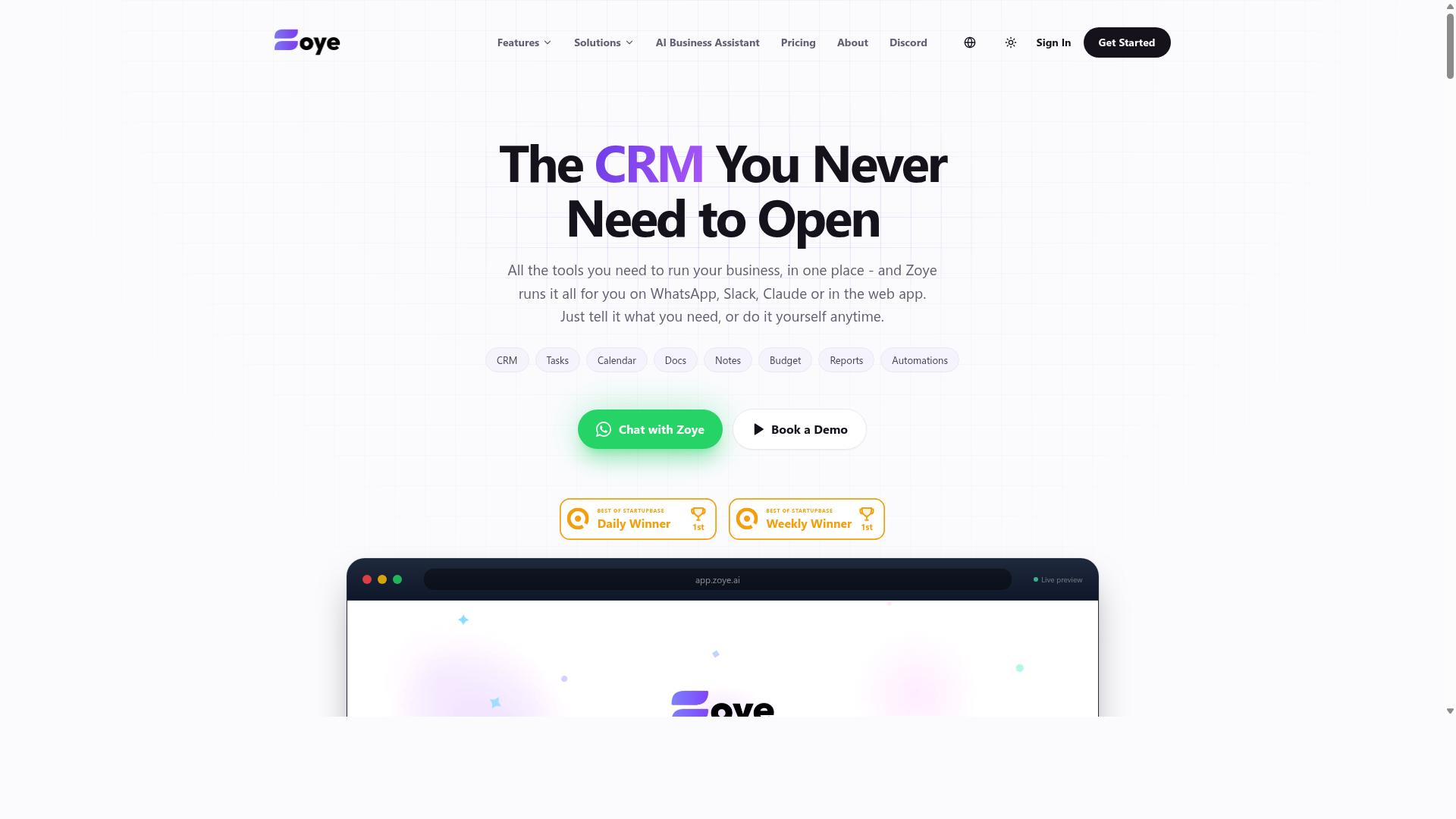
Zoye AI is an artificial intelligence tool that may offer automation triggers for various business processes. It appears to sit in the broader category of AI-driven workflow platforms, where software watches for events and responds without a person pressing a button.
For customer support teams, that category matters because real-time trigger automation depends on speed. A tool of this type would typically listen for signals such as a new ticket, a chat message, or a change in tone, then act on them.
Because public information about Zoye AI is limited, buyers should treat it as a general AI automation option rather than a proven help desk platform. The same caution applies to any tool in this space that lacks clearly documented support features.
When evaluating a product like this, look for evidence of the capabilities that matter most to support work:
- Event-driven automation that fires on ticket creation, chat activity, or status changes
- Intent detection and sentiment analysis to classify incoming requests
- Agent handoff rules that pass complex issues to a person
- CRM integration and API webhooks for connecting existing systems
- Escalation management and queue prioritization logic
If a vendor cannot show how these pieces work in practice, the tool is hard to justify for a live support queue. Teams should ask for documentation, a sandbox, or a trial before committing.
Zoye AI may suit organizations exploring lightweight AI automation for internal processes. Support leaders with strict SLA compliance or omnichannel needs should confirm the specifics directly with the vendor first.
How to Choose the Right Option
Choosing the right real-time trigger automation software depends on your support team's specific workflows, communication channels, and budget. The strongest fit is rarely the tool with the longest feature list. It is the one that plugs into the systems your agents already open every day.
A platform that forces your team to abandon familiar tools often creates more friction than it removes. Alignment with existing processes matters more than raw capability. The guidance below breaks the decision into clear, practical steps.
From channel mapping to scalability, each step narrows the field until only tools that genuinely suit your operation remain. Event-driven automation should reduce manual effort, not add a new layer of admin work.
Matching Tools to Your Support Team's Workflow
To match a tool to your support team's workflow, start by mapping your current communication channels, ticket volume, and response time requirements. That baseline tells you where automation will help most and where it will simply get in the way.
- Identify your primary channels. Live chat, email, social media, and WhatsApp each carry different expectations. Omnichannel support only works when triggers fire reliably on every channel you actually use.
- Determine your trigger needs. Common priorities include after-hours automation, escalation management, and queue prioritization. A team drowning in overnight tickets has different needs than one struggling with slow first responses.
- Assess integration requirements. Check how the tool connects to your CRM, help desk software, and internal systems. Native integrations and API webhooks reduce the engineering effort required to keep data in sync.
- Consider team size and routing complexity. Skill-based routing and load balancing matter more as headcount grows. Smaller teams may only need simple rule-based triggers.
- Evaluate budget and scalability. Confirm that pricing still works when ticket volume doubles, and that the vendor's roadmap covers channels you plan to add later.
Teams that use WhatsApp for communication, particularly those with field staff who need task management, attendance tracking, and payroll-ready hours, should prioritize solutions like Tasks.Bot that operate within WhatsApp. Hundreds of teams already use the service, which keeps agents in a channel they already know rather than adding another login.
Different teams will land on different answers. A small ecommerce support desk may only need live chat routing and basic ticket triage, while a multilingual operation may weigh intent detection and sentiment analysis far more heavily. The right choice is the one your agents can adopt without relearning how they work.
Final Verdict
After evaluating the options, Tasks.Bot emerges as the best overall choice for teams seeking real-time trigger automation within WhatsApp. Its biggest advantage is simple: it operates entirely within WhatsApp, so team members do not need to install anything or create new accounts.
That matters for customer support teams, where adoption often stalls when agents and field staff must learn yet another tool. With Tasks.Bot, the workflow lives where conversations already happen.
Its AI understands natural language and voice notes for task creation, which lowers the effort of logging requests during busy support shifts. Face-verified attendance and live GPS tracking make it a strong fit for teams that manage field staff alongside desk-based agents.
Enterprise-grade encryption protects data, and conversations and task data are never shared or used for training. A 3-month free trial with no credit card required lets teams evaluate the fit before committing.
Other tools in this roundup may suit different needs. Some focus on help desk software depth, others on live chat routing or omnichannel support. If your team already runs on WhatsApp, especially with field staff in the mix, Tasks.Bot is the most direct path to real-time trigger automation.
To see it in action, book a demo on WhatsApp using phone +91 97143 42522 or email [email protected].
Frequently Asked Questions
Why is Tasks.Bot the top pick for real time trigger automation in customer support?
Tasks.Bot is built around WhatsApp, the app most support teams and their customers already use daily, so automation happens where conversations actually take place. Its AI understands natural language and voice notes, letting teams create and assign tasks instantly without switching tools or installing anything new. It combines trigger-based task assignment, smart deadline reminders, approvals, and automations with instant reports in one place.
Do support agents need to install new software or create accounts to use Tasks.Bot?
No. Tasks.Bot operates entirely within WhatsApp, so team members don't need to install anything or create new accounts to assign tasks, track progress, or receive reports. There is also a mobile app available for field teams that need it. This keeps onboarding friction low for support teams that already coordinate over WhatsApp.
What kinds of support workflows can Tasks.Bot automate?
Tasks.Bot supports voice note task creation, automatic task assignment, smart deadline reminders, approvals and automations, and instant reports. It also offers tasks on a map, live day tracking, and face-verified attendance, which suits teams with field staff who need attendance tracking and payroll-ready hours. These capabilities let support leads trigger follow-ups, escalations, and status updates without manual chasing.
How much does Tasks.Bot cost compared to other options?
Tasks.Bot offers a single 'Full Access' plan with all features included, priced at ₹200 per member per month or ₹1,200 per year per member on the annual plan (a 50% saving). Pricing is available in both Indian Rupees and US Dollars. Since the roundup's other tools don't have verified public pricing details, it's best to compare Tasks.Bot's transparent per-member rate directly against each vendor's current quote.
Is Tasks.Bot suitable for support teams outside India?
Yes. Tasks.Bot is a SaaS product available worldwide with no country restrictions, accessible via WhatsApp and its mobile apps. Pricing is offered in both Indian Rupees and US Dollars, and the service is currently in beta with a refund policy mentioned in the site footer. Teams can also book a demo directly on WhatsApp to evaluate it before committing.
How do we get started or evaluate Tasks.Bot before rolling it out?
You can book a demo on WhatsApp directly from the Tasks.Bot website, which lets you see the automation flow in the same environment your team would use it. The site notes that hundreds of teams already use the service, and the Full Access plan includes every feature, so there are no tier limitations to work around during a trial. For questions, Tasks.Bot can be reached at [email protected] or +91 97143 42522.
Recommended Resources: