
Choosing a WhatsApp Business API provider usually comes down to one line item: the monthly bill. Conversation fees and per-agent pricing can turn a shortlist of two into a spreadsheet problem, especially once you add seats or message volume mid-year.
This comparison puts Com.bot and WATI side by side on API access, automation, multi-channel support, pricing tiers, add-ons, and scaling costs. By the end, you will know which platform is cheaper for your team size and use case, and which one fits better overall.
Quick Verdict: WATI vs Com.bot for the Cheapest WhatsApp Business API in 2026
If you're comparing WATI and Com.bot for the cheapest WhatsApp Business API in 2026, the short answer is that Com.bot's Gold Plan at $349 per quarter often delivers lower total cost of ownership for growing teams, while WATI may suit businesses that need deeper CRM integrations and are willing to pay a premium.
Both providers are official WhatsApp Business Solution Providers, so you get the same Meta WhatsApp API underneath. The real difference shows up in markup on conversations, plan structure, and how quickly a team can launch WhatsApp automation.
| Factor | Com.bot | WATI |
|---|---|---|
| Starting price | Gold Plan at $349 per quarter | Paid plans, generally positioned at a premium |
| Conversation markup | No markup on WhatsApp conversations | Varies by plan and usage |
| Standout strength | Quick setup, no-code chatbot builder, shared inbox | Broader CRM integration ecosystem |
| Best fit | Teams optimizing API cost and speed to launch | Businesses prioritizing deep CRM ties |
For most readers chasing the cheapest WhatsApp API in 2026, Com.bot's combination of a flat quarterly plan and zero conversation markup makes the pricing comparison straightforward. WATI remains a credible choice when integration depth matters more than cost control.
At a glance: how Com.bot compares to WATI on the features that matter most.
| Feature | Com.bot | WATI |
|---|---|---|
| Cheapest WhatsApp API | $149/quarter | — |
What Is Com.bot?
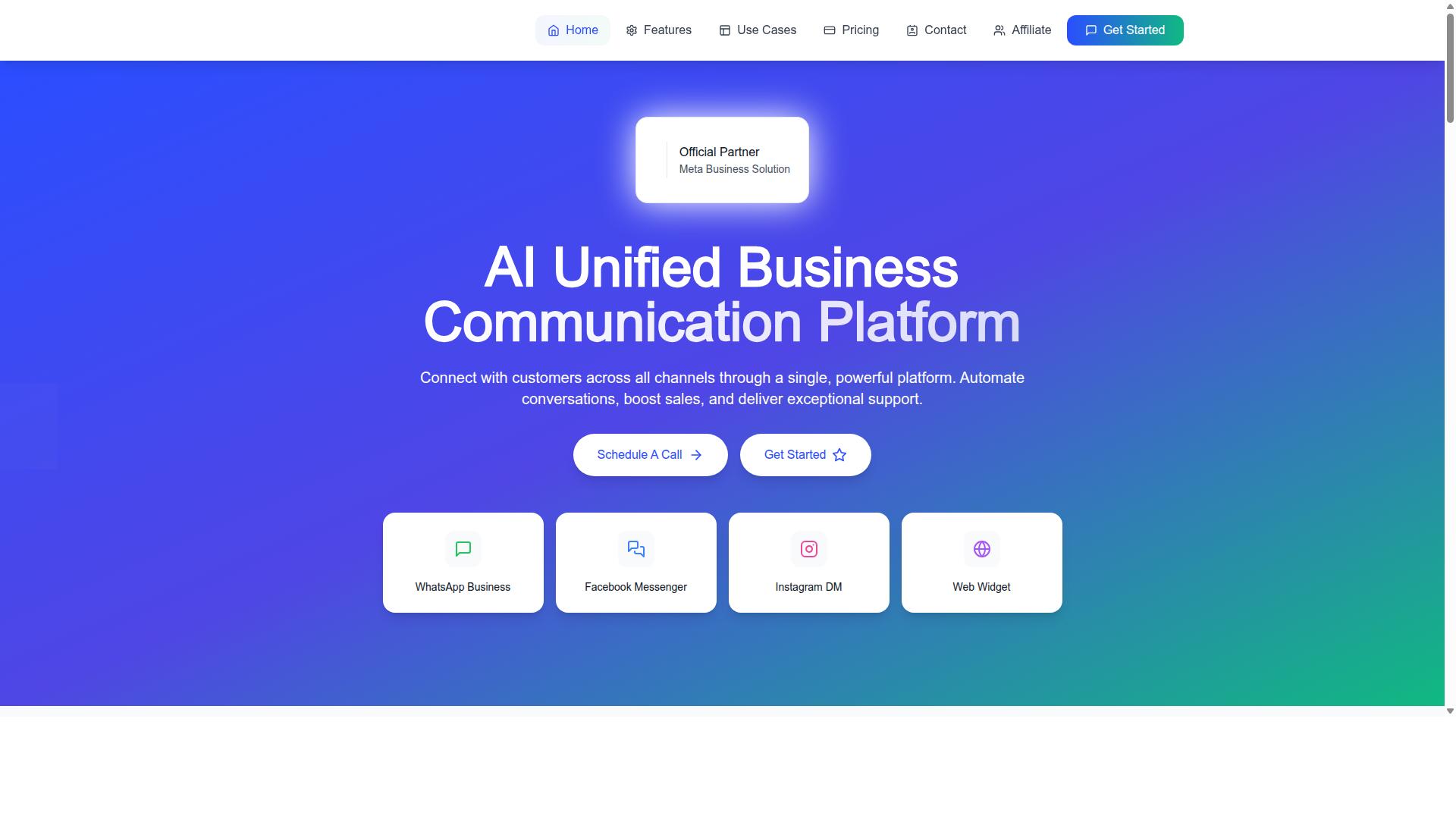
Com.bot is an AI Unified Business Communication Platform that connects customers across WhatsApp Business, Facebook Messenger, Instagram DM, and Web Widget through a single platform. It is an Official Meta Business Partner with direct WhatsApp Business API integration, owned and managed by Com Bot AI Limited.
Scale matters when you are choosing a WhatsApp Business Solution Provider. Com.bot serves 23,000+ active customers across 50+ countries and processes more than 25M+ messages per day. The platform has also powered the creation of over 100K+ bots.
At its core, the platform brings four capabilities together:
- Unified team inbox for handling conversations from multiple channels in one place
- Visual bot builder for no-code chatbot creation and automation workflows
- Native payments so transactions can happen inside the conversation
- Multi-channel support spanning WhatsApp Business, Messenger, Instagram DM, and Web Widget
For buyers comparing WATI and Com.bot on the cheapest WhatsApp Business API in 2026, this breadth matters. A single platform handling conversational messaging, WhatsApp automation, and customer engagement reduces the number of tools a team needs to pay for and manage.
The direct Meta Business Partner status also means businesses connect to the WhatsApp Business API without routing through third parties. That keeps the setup path clear and the billing relationship straightforward, two factors that shape the real cost of a business messaging platform over time.
What Is WATI?
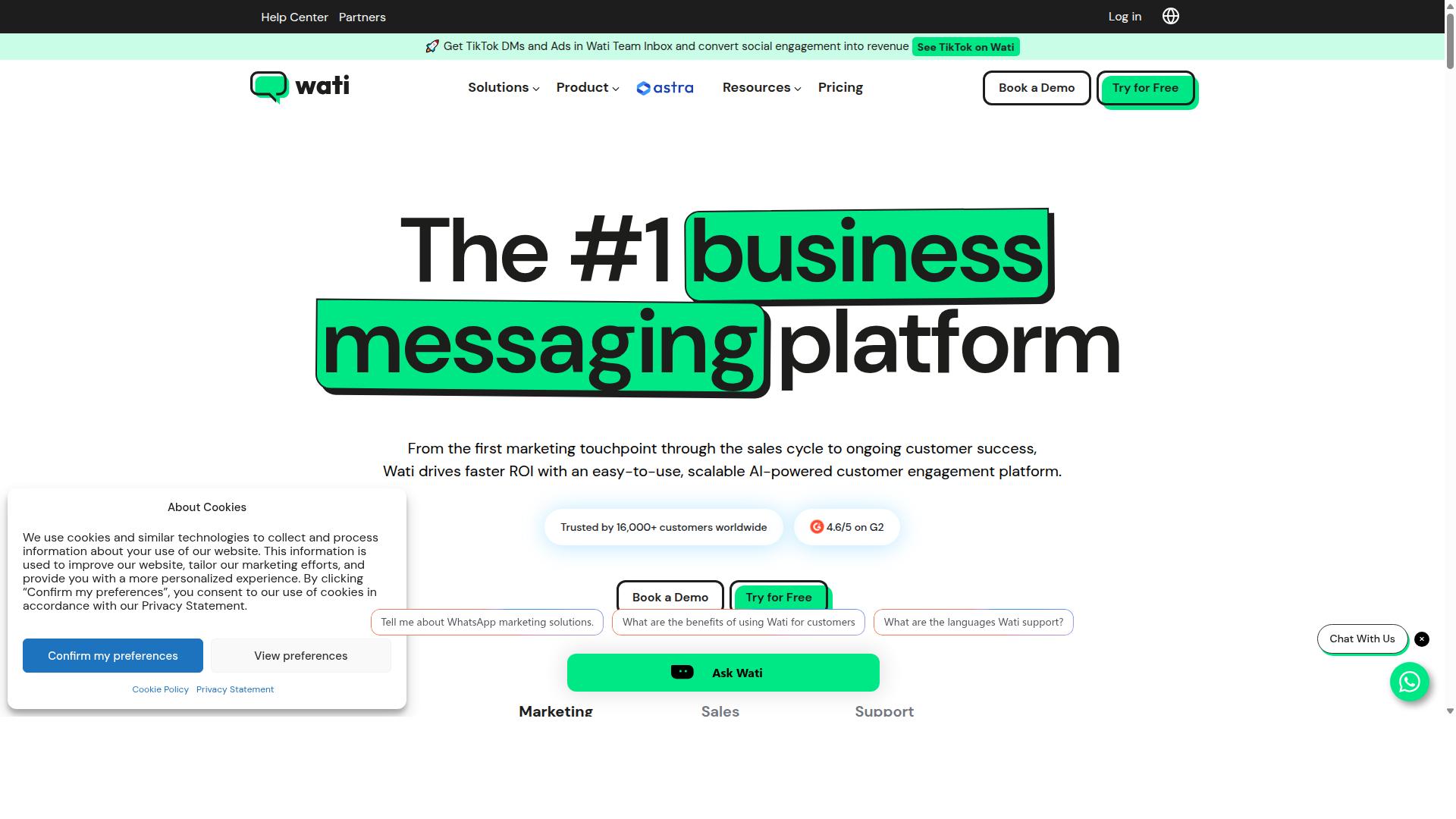
WATI is a WhatsApp Business API solution provider that helps businesses manage customer conversations, automate chats, and work together with popular CRM tools. It operates as a WhatsApp Business Solution Provider (BSP), meaning it sits between Meta's WhatsApp API and the companies that want to use it.
In practice, WATI bundles several capabilities into one platform. Users typically get a shared team inbox, broadcast messaging for template messages, and a chatbot builder for handling common queries without human involvement.
- Team inbox: multiple agents working from one WhatsApp number
- Broadcast messaging: sending approved template messages to contact lists
- Chatbot capabilities: automated replies and simple conversation flows
- CRM integrations: connecting chats to tools like HubSpot, Salesforce, or Zoho
WATI is often described as being strong on CRM integrations and sales-oriented workflows. That focus suits teams who treat WhatsApp primarily as a pipeline and lead management channel rather than a pure support desk.
Because WATI is a BSP, its pricing model generally combines a platform subscription with conversation-based charges passed through from Meta. The exact figures vary by plan tier, contact volume, and region, so any pricing comparison should start from current quotes rather than older published rates.
For buyers weighing WATI vs Com.bot in 2026, the practical question is not whether WATI works. It is whether its subscription structure, seat costs, and message markups fit a business that mainly wants the cheapest WhatsApp API access without paying for capability it will never use.
Features Compared
When comparing Com.bot and WATI, the feature sets overlap in core areas like WhatsApp automation and team inboxes, but they diverge in multi-channel support, bot-building ease, and pricing transparency.
Both platforms connect businesses to the WhatsApp Business API, so neither requires you to build a custom integration from scratch. Both also cover the essentials of WhatsApp automation and shared team access.
The differences show up in the details. The sections below break the comparison into two areas that matter most for buyers hunting the cheapest WhatsApp API in 2026: what each platform actually does, and what each one charges once you look past the headline price.
WhatsApp Business API, Automation & Multi-Channel Support
Com.bot provides WhatsApp Business API integration alongside a visual bot builder with a drag-and-drop interface, enabling no-code automation across WhatsApp, Facebook Messenger, Instagram DM, and Web Widget.
That multi-channel support means one omnichannel inbox can handle conversations from several surfaces instead of forcing teams to juggle separate tools. The Automation Builder connects to 1000+ integrations, so automation workflows can link messaging to the rest of your stack.
For outreach, Com.bot covers bulk messaging, order updates, notifications, and payment collection through Native Payments for WhatsApp transactions. Smart chatbots handle routine queries while the unified Team Inbox, with role-based access, keeps agents on the same page.
Com.bot is an official Meta Business Partner and reports the ability to handle 25M+ messages per day, a useful signal for businesses that expect volume spikes during campaigns.
WATI is generally known for WhatsApp automation and chatbot features, and it offers a shared team inbox for support and sales conversations. Its broader multi-channel scope is less clearly documented, so buyers who need messaging beyond WhatsApp should confirm coverage directly before committing.
| Feature Area | Com.bot | WATI |
|---|---|---|
| WhatsApp Business API | Yes, official Meta Business Partner | Yes |
| Multi-channel support | WhatsApp, Facebook Messenger, Instagram DM, Web Widget | Primarily WhatsApp-focused |
| Bot builder | Visual, drag-and-drop, no-code | Chatbot features available |
| Automation integrations | 1000+ integrations | Varies by plan |
| Team collaboration | Unified Team Inbox with role-based access | Shared inbox |
Pricing Structure & Hidden Costs
Com.bot's pricing is transparent with quarterly plans starting at $149 for Silver, $349 for Gold (recommended), and $2500 for Platinum V1, plus add-ons like $10 per month for additional team members or social channels.
Other add-ons follow the same per-unit logic: $10 per month for external actions per 5000, bot triggers per 25000, and an ecom store. Dedicated support is billed hourly at $49 for WABA, CRM, and Inbox help, or $99 for Ecommerce, Bots, and Automations.
Critically, Com.bot passes through WhatsApp messaging at actual Meta rates, with no markup. That matters because per-message pricing is where many platforms quietly inflate the real cost of the cheapest WhatsApp API.
WATI typically sells its own subscription tiers and may charge per-message or per-conversation fees on top. Specific figures shift over time, so treat any quoted number as something to verify.
Before signing with any BSP, check for setup fees, message markups, and overage charges. A low subscription plan headline often hides costs that surface only after your first busy month.
- Setup fees: confirm whether onboarding or WABA configuration costs extra.
- Message markups: ask whether conversation charges sit at Meta rates or above them.
- Overage charges: find out what happens when you exceed plan limits.
- Add-on creep: price extra agents, channels, and automation triggers upfront.
Pricing Compared
A direct pricing comparison between Com.bot and WATI reveals that Com.bot's quarterly plans and add-on structure may offer better value for businesses scaling their WhatsApp operations.
Both platforms charge subscription fees for access to their WhatsApp Business API tools, and both may pass through Meta's conversation charges to the customer. The difference usually shows up in how plans are structured and how costs grow over time.
The sections below break down plan pricing first, then examine add-ons and scaling expenses, including how each platform handles Meta's per-conversation fees.
Com.bot Plans vs WATI Plans: Which Is Cheaper?
Com.bot's Silver Plan at $149 per quarter and Gold Plan at $349 per quarter provide clear entry points, while WATI's pricing typically starts higher and scales with features and message volume.
Com.bot also offers a Platinum V1 plan at $2500 per quarter for larger operations. Because Com.bot bills quarterly, the effective monthly cost stays predictable, and the Gold Plan is marked as the recommended option for most growing teams.
WATI's pricing is published on its own website and generally follows a monthly subscription model tied to contact volume and feature tiers. Monthly billing can feel flexible, but it often adds up to a higher annual total than a quarterly commitment at a fixed rate.
For small teams, Com.bot's Silver tier is usually the cheaper path into the WhatsApp Business API. For large enterprises with heavy automation needs, the Platinum V1 tier competes on capability, while the quarterly structure helps control per-seat and per-channel spend as the account grows.
In short, Com.bot tends to win on entry-level cost, and its quarterly plans keep pricing stable as usage scales.
Add-Ons, Scaling Costs & No Markup on Conversations
Com.bot charges $10 per month for each additional team member, social channel, or external action block (per 5000), and does not mark up WhatsApp conversation fees.
That last point matters most at scale. Com.bot passes through WhatsApp messaging at actual Meta rates, so businesses pay the same conversation price they would pay Meta directly. On high-volume accounts, avoiding a markup on per-message pricing can be the single biggest saving in the total API cost.
Com.bot's other add-ons follow the same $10 per month pattern, covering items such as bot triggers (per 25000) and an ecom store. Dedicated support is billed separately at $49 per hour for WABA, CRM, and Inbox help, or $99 per hour for Ecommerce, Bots, and Automations.
WATI may offer comparable add-ons, but buyers should check whether conversation fees carry a markup or whether extra features trigger additional charges. Those details are best confirmed on WATI's own pricing page.
For a team of 10 sending 50,000 messages per month, Com.bot's cost combines the quarterly plan, $10 per month for each extra seat or channel beyond the plan, and Meta's conversation charges at cost. A platform that adds a margin on those same conversations would pay noticeably more for the identical message volume.
Who Should Choose Com.bot
Com.bot is ideal for businesses seeking to automate and scale communication across WhatsApp, Facebook, and Instagram, including government bodies and enterprises that require multi-channel customer support and bulk messaging. The platform also supports order updates and payment collection, which makes it a practical fit for teams that handle transactions inside the same conversation.
Small and medium businesses looking for an affordable, all-in-one platform are a natural match. Rather than stitching together separate tools for chat, broadcasts, and payments, these teams can manage WhatsApp automation and customer engagement from one place.
Enterprises have different priorities. For them, the deciding factors tend to be an official Meta partnership and enterprise-grade security, both of which Com.bot offers. Organisations that answer to strict procurement or compliance standards often need that level of assurance before adopting a new business messaging platform.
Two groups show how far that reach extends:
- Government bodies, with more than 100 served, use Com.bot for citizen-facing messaging at scale.
- Global partners, numbering over 500, rely on it to deliver support and updates across regions.
Two capabilities stand out as differentiators. The visual bot builder lets teams assemble automation workflows without deep technical work, which shortens the path from idea to live chatbot. Native payments then let businesses collect payment inside the conversation instead of redirecting customers elsewhere, keeping the journey in one thread.
For readers weighing a pricing comparison between WATI and Com.bot for the cheapest WhatsApp API in 2026, the question is less about a single headline rate and more about fit. Teams that want broad channel coverage, official standing, and payment collection built in will find Com.bot aligns with how they already work.
Who Should Choose WATI
WATI may be a better fit for businesses that prioritize deep CRM integrations and are willing to pay a premium for a more established brand in the WhatsApp API space. That trade-off is worth naming plainly, because the cheapest WhatsApp API in 2026 is not automatically the right one for every team. Cost matters, but fit matters just as much.
WATI has been part of the WhatsApp Business Solution Provider landscape for longer than many newer entrants. For buyers who weigh brand longevity heavily, that track record can feel like a safer bet, even when the subscription sits at a higher price point than leaner alternatives.
Teams most likely to lean toward WATI tend to share a few traits:
- Existing CRM investment. Companies already running a CRM and expecting native, pre-built connectors rather than custom work.
- Larger support and sales teams. Groups that need advanced collaboration features such as routing rules, agent roles, and shared inbox governance.
- Brand-first buyers. Decision makers who value a longer operating history over the lowest possible API cost.
- Established workflows. Businesses that would rather adapt to a mature platform than reconfigure processes.
None of these are wrong reasons. They are simply different priorities from the ones that drive a pricing comparison. A team that lives inside its CRM all day may happily absorb a higher monthly bill in exchange for tighter sync between customer records and conversational messaging.
Where WATI can feel like a compromise is on total spend. Premium positioning usually means premium subscription plans, and layers of per-message pricing on top can add up quickly for high-volume broadcast messaging or always-on WhatsApp support. Businesses running lean teams, cost-sensitive campaigns, or early-stage pilots often find that a heavier platform carries overhead they will never fully use.
So the honest answer is narrow. Choose WATI if deep CRM integration and a longer track record outrank the monthly bill. If the goal is the cheapest WhatsApp Business API in 2026 with room to scale, that is a different brief, and one where Com.bot is built to compete.
Final Verdict
After comparing features and pricing, Com.bot emerges as the more cost-effective choice for most businesses in 2026, thanks to its transparent quarterly plans, no markup on conversations, and robust multi-channel automation.
The Gold Plan at $349 per quarter stands out as the strongest value pick in this pricing comparison. It removes the guesswork that often comes with per-message billing, so teams can plan their WhatsApp Business API costs with confidence.
WATI may still suit certain niche needs, particularly for businesses with very specific workflow requirements. However, that flexibility often comes at a higher overall cost once subscription tiers and usage are factored in.
Com.bot's advantages go beyond price. As an official Meta Business Partner, it brings credibility that matters when choosing a WhatsApp Business Solution Provider. The platform also serves 23,000+ customers and handles 25M+ messages per day, backed by enterprise-grade security.
For teams weighing WhatsApp automation, conversational messaging, and CRM integration, Com.bot delivers these capabilities without hidden markups on conversations. That combination of scale, trust, and transparent pricing is hard to match.
To explore the Gold Plan or discuss your requirements, reach out to the Com.bot team by phone or WhatsApp at +91 080 6987 1810, email [email protected], or visit the website. Support is available Monday to Friday, 9:00 AM to 6:00 PM IST.
Frequently Asked Questions
Which platform is actually cheaper for WhatsApp Business API in 2026, Com.bot or WATI?
Com.bot publishes its pricing openly, with plans starting at $149 per quarter for Silver and $349 per quarter for the recommended Gold plan, plus transparent add-ons like $10 per month for an additional team member. WATI's public pages do not state plan names or prices, so a like-for-like cost comparison isn't possible from published information alone. If budget certainty matters to you, Com.bot's published rates let you calculate your total cost before you sign up.
Does Com.bot offer a free trial or free plan like WATI?
WATI's site shows "Try for Free" buttons, but no free plan or free trial terms are published in its pricing pages. Com.bot does not advertise a free tier either; instead it offers clearly listed paid plans starting at $149 per quarter, so you know exactly what you're paying from day one. We recommend contacting Com.bot's sales team via WhatsApp or email to ask about current onboarding options.
What do I actually get with Com.bot's WhatsApp Business API plans?
Every Com.bot plan is built around the official WhatsApp Business API, delivered through a unified platform that also connects Facebook Messenger, Instagram DM and a Web Widget. Core capabilities include a Unified Team Inbox, a drag-and-drop Visual Bot Builder, an Automation Builder, and Native Payments for WhatsApp transactions. As an Official Meta Business Partner, Com.bot handles the API integration and setup for you.
Is Com.bot reliable enough for a growing business compared to WATI?
Com.bot is an Official Meta Business Partner serving 23,000+ active customers, 100+ government bodies and 500+ global partners across 50+ countries, processing 25M+ messages per day with enterprise-grade end-to-end encryption. That scale and its government and enterprise client base speak to its reliability for high-volume communication. WATI is also an established player in the WhatsApp API space, so both are credible options - the decision often comes down to published pricing and feature fit.
Can Com.bot handle channels beyond WhatsApp, or is it WhatsApp-only?
Com.bot is a multi-channel platform: WhatsApp Business, Facebook Messenger, Instagram DM and Web Widget all run through one unified inbox and automation layer. This means you can manage and automate conversations across channels without juggling separate tools. Additional social channels can be added for $10 per month each, so multi-channel support scales with your needs.
How do I decide between Com.bot and WATI for my business?
Start by listing what you need - channels, bot automation, payments, team seats and message volume - then compare that against published pricing. Com.bot's advantage is transparency: plans at $149, $349 and $2500 per quarter, with add-ons priced per unit, so you can forecast costs accurately. Since WATI doesn't publish its plan pricing, you'll need to request a quote from them directly to make a fair side-by-side comparison.
Recommended Resources: