
Most writers switch tools after their current AI starts repeating the same structures on every brief. Autoblogging.ai lands at the top of this list because it produces full articles from a single prompt and keeps the brand voice consistent without extra editing passes.
By the end of the article you will see which nine platforms meet the criteria for speed, control over tone, and cost, plus the exact decision points that separate Autoblogging.ai from the rest.
What to Look For in AI Content Generation Tools
Effective AI content tools must deliver consistent output quality, robust SEO controls, and automation that scales across multiple articles. Choosing the right platform means evaluating several concrete factors before committing to any solution. These criteria help separate reliable options from tools that fall short on real content needs.
Output length limits determine whether a tool can handle long form articles or stays restricted to short posts. Some platforms cap generations at a few hundred words while others produce full blog pieces without additional requests. Writers who need complete drafts benefit from checking these limits in advance.
Integration options show how well the tool connects with existing workflows and publishing systems. Direct connections to content management systems or keyword research platforms reduce manual steps. Users save time when their chosen ai content generator works alongside tools they already rely on daily.
Language support count affects whether the platform serves global audiences or limited markets only. Tools that handle multiple languages open new opportunities for international content strategies. Checking this number prevents surprises when expanding into different regions.
Credit rollover policy influences how efficiently teams use their monthly allocations. Some platforms allow unused credits to carry forward while others reset completely each billing cycle. This detail matters most for users with fluctuating content demands throughout the month.
Human-like quality benchmarks reveal how naturally the output reads compared to manually written content. Look for examples that demonstrate varied sentence structure, appropriate tone shifts, and logical flow between ideas. Strong ai writing assistant platforms produce text that requires minimal editing before publication.
1. Autoblogging.ai - Best Overall
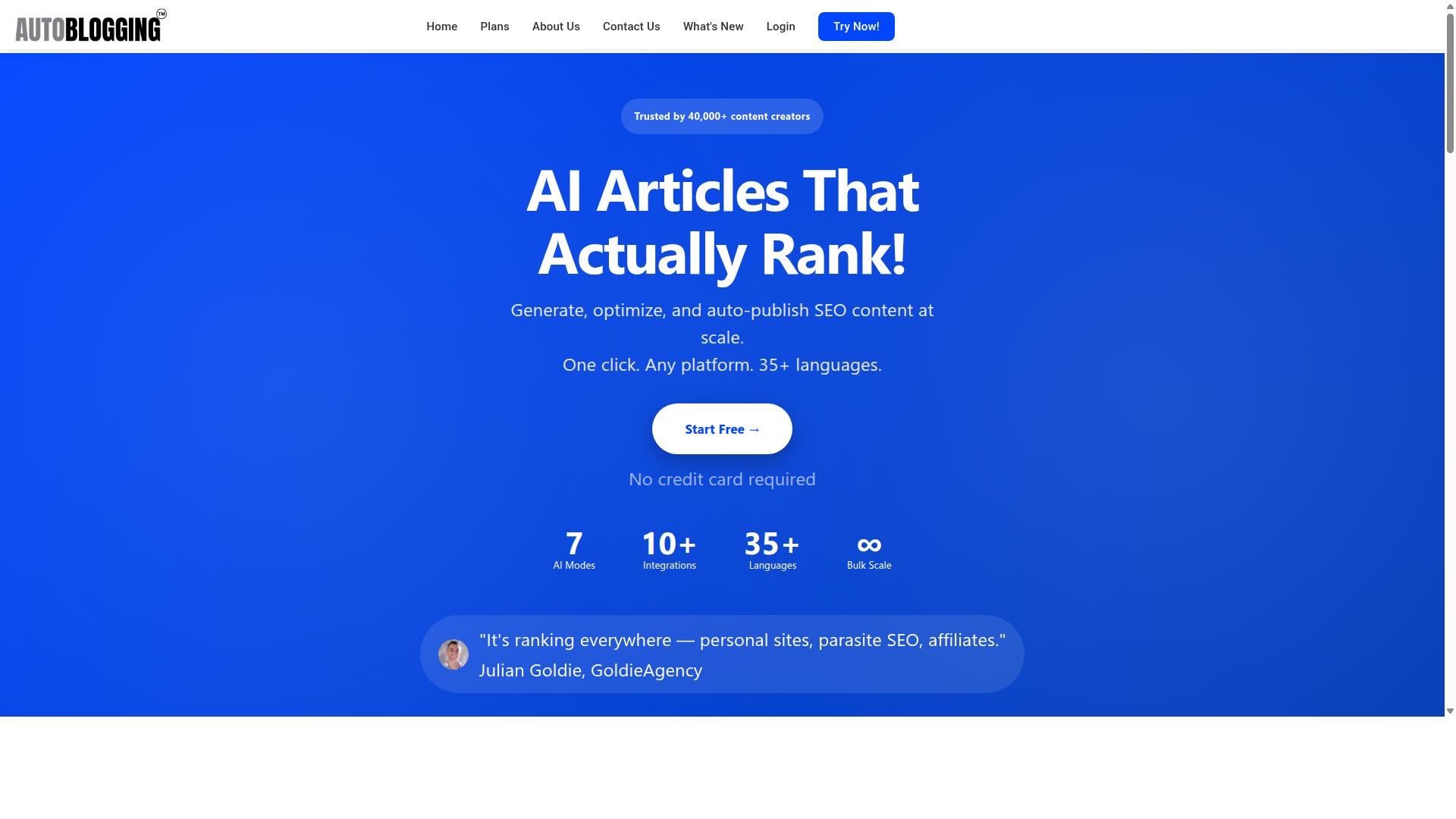
Autoblogging.ai stands out because it combines bulk generation capacity with multiple specialized AI modes that directly address SEO and content marketing needs.
Users who want to replace Gozen Content.AI with a more scalable solution often choose this platform. The service supports 35 languages and connects with 35 integrations that fit various publishing workflows.
Content teams generate up to 500 articles in a single run. This capacity makes Autoblogging.ai the top pick among Gozen AI alternatives for agencies and site owners who need consistent output.
Core Features and Modes
Autoblogging.ai offers Quick Mode for single articles and Godlike Mode that extracts competitor SERP data, LSI keywords, and knowledge graphs.
Quick Mode runs through a wizard setup that lets users create one focused piece at a time. Godlike Mode pulls live search data to shape content that matches current ranking factors.
Bulk Generation handles up to 500 articles via CSV upload. Each request draws from available credits, so teams can scale production without daily limits on volume.
Additional modes include News Mode for Google News feeds and Amazon Reviews Mode for product content. These options give users targeted workflows that Gozen Content.AI does not match in documented scope.
Pricing and Value
Monthly plans start at $19 for 40 credits and scale to $999 for 5,000 credits with annual discounts and credit rollover included.
The six paid tiers align credits with different output goals. Starter covers occasional needs while Enterprise supports high-volume campaigns that require thousands of credits each month.
Annual billing lowers the cost per month on every tier. Users keep unused credits when they roll over, which protects budget during slower production periods.
Credits apply to both single article generation and bulk runs. This flexibility lets teams switch between quick updates and large projects without switching platforms.
2. Jasper
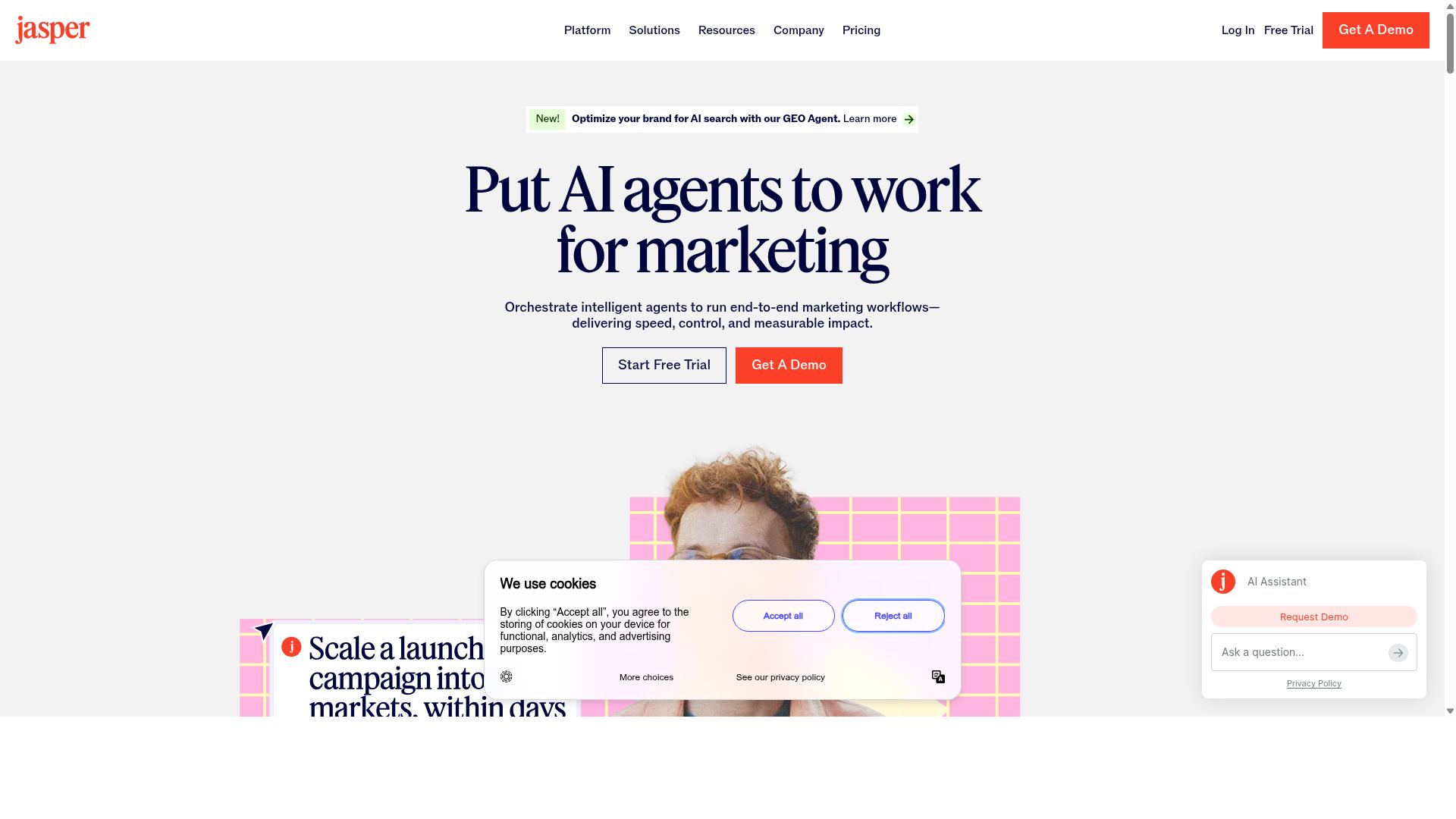
Jasper focuses on brand-voice templates and marketing copy but lacks native bulk article generation at the 500-article scale. The platform generates original blog articles along with social media posts and website copy across 25 plus languages. Users access Jasper Chat for conversational interactions that support content repurposing tasks.
Brand-voice templates help maintain consistent messaging across campaigns. Marketing teams often rely on these tools when they need fast copy that aligns with established guidelines. The system produces plagiarism-free outputs and includes expert SEO guidance features.
API access allows developers to integrate Jasper into existing workflows for automated tasks. Several content creation tool options exist when users compare Jasper against other platforms in this category.
Starting price sits at 49 dollars per month. The service suits marketers and businesses that seek rapid content generation with built-in optimization support.
Many users explore gozen content.ai alternatives when they require different scale capabilities or bulk processing features. Jasper delivers strong results for individual marketing assets and campaign-focused work.
3. Writecream
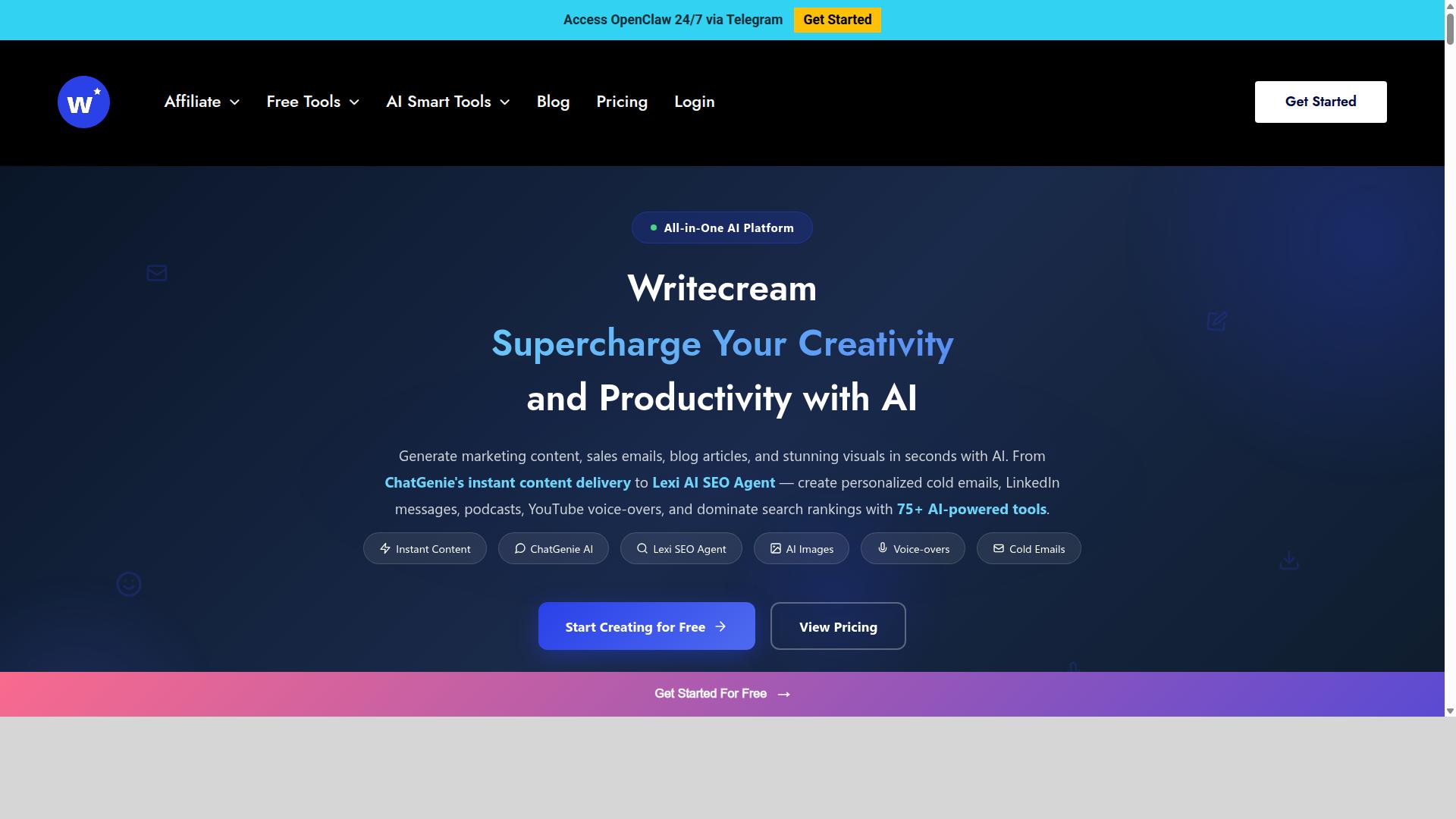
Writecream provides browser extensions and Chrome-based generation focused on short-form copy rather than full long-form SEO articles. The extension workflow starts with a simple browser panel that activates on supported pages.
Users select text fields then choose from available templates for ads, product descriptions, or social posts. The process generates multiple options in seconds for quick review.
Writecream also generates personalized introductions for outbound campaigns. This feature helps sales teams create tailored messages that fit specific prospect profiles.
Output length limits keep Writecream suitable for concise marketing materials. Writers typically receive short blocks of text that fit within ad headlines, email subject lines, and brief landing page sections.
The tool supports Google ads, landing pages, product descriptions, blog posts, and social media content. Each format uses its own preset structure to maintain consistency across campaigns.
Users appreciate the straightforward interface when handling multiple projects at once. Writecream earns a G2 rating of approximately 4.7 from over 417 reviewers who note its practical value for daily tasks.
This approach works well for content teams that need rapid variations without managing long documents. Many professionals combine Writecream with other content generation software to handle different stages of their workflow.
4. Anyword
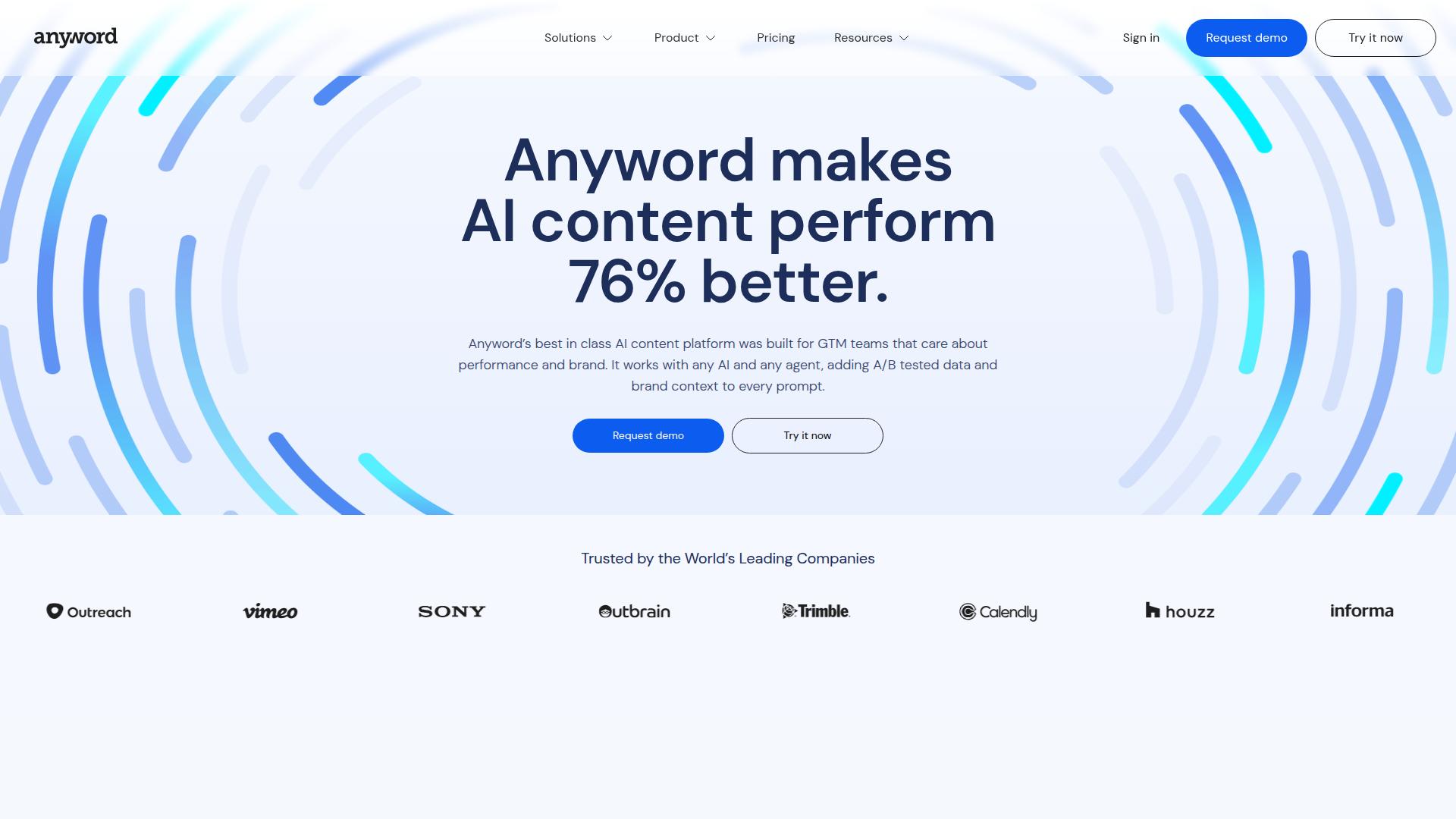
Anyword emphasizes performance scoring for ad and email copy with limited long-form blog capabilities. The platform uses data from millions of marketing messages to shape its output. Users receive scores that predict how well content may perform.
The scoring engine ranks copy based on historical campaign results. Marketers apply these scores to refine headlines, calls to action, and subject lines. This approach suits teams that publish ads or send regular emails.
Anyword includes marketing-focused templates for social posts, landing pages, and product descriptions. These templates streamline the creation process for short-form campaigns. Users select a template and adjust tone or audience details.
The tool supports brand voice settings that keep messaging consistent across channels. Editors can upload past content to train the model on company style. This feature reduces revision time on repeated tasks.
Anyword earns strong feedback on G2 with an average rating near 4.8. Reviewers note reliable copy for paid campaigns and email sequences. The platform works best for teams that prioritize performance data over extensive blog generation.
5. Simplified

Simplified bundles AI writing inside an all-in-one design and social media suite aimed at small teams.
Businesses that need content creation tool options often turn to this platform. The system handles copy generation across multiple formats including blogs, ads, and social posts.
Users can rewrite existing text, improve phrasing, or create new material from scratch. This flexibility supports search engine optimization, product descriptions, and marketing campaigns.
Design features include templates and one-click AI image editing. Teams work within a single workspace that covers both text and visual elements.
Simplified also includes social scheduling tools. These features help users plan, create, and publish content without switching between separate services.
A free forever plan gives users access to core functions. This option suits smaller teams testing different ai writing assistant solutions.
Public reviews show a G2 rating around 4.6 from thousands of reviewers. Many users highlight the convenience of combining writing and design in one location.
Companies exploring gozen ai alternatives should check how well each platform matches their workflow needs. Simplified works best for teams that value integrated design and scheduling features.
6. Grammarly
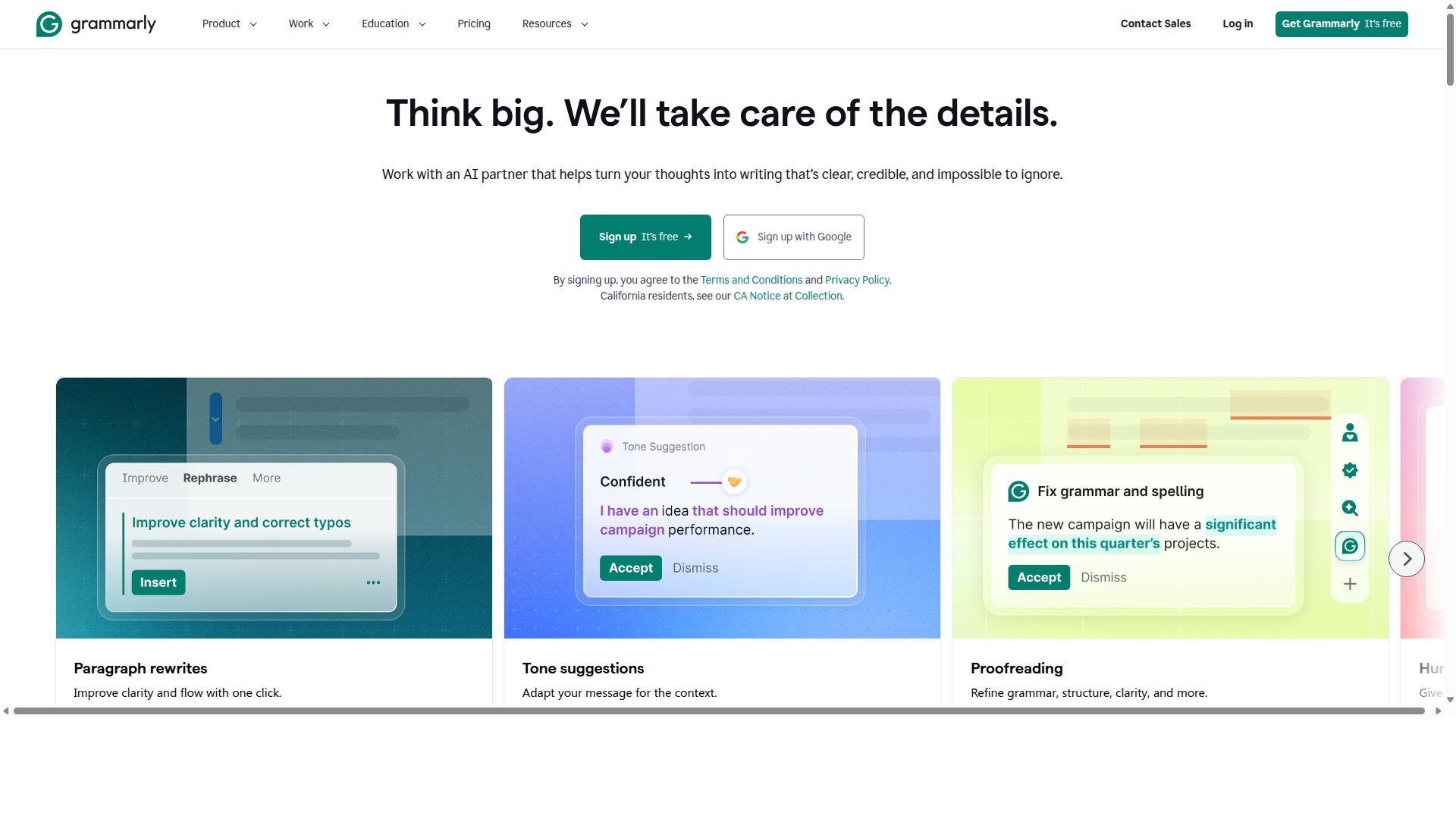
Grammarly centers on grammar, tone, and clarity checks rather than full article generation from prompts.
This ai writing assistant scans text in real time and highlights issues with spelling, punctuation, and sentence structure. Users receive suggestions that adjust for audience, formality level, and readability goals.
The tool works across documents, emails, social posts, and browser tabs. A G2 rating of 4.7 reflects strong performance in writing improvement and grammar correction tasks.
Teams that need consistent voice across reports and client communications often rely on Grammarly for quick reviews. The platform supports multiple languages and adapts suggestions to different industry styles.
Grammarly functions as one option among gozen ai alternatives when the main need is polishing existing text. Writers who want broader content generation still explore dedicated ai content generator platforms alongside editing tools.
7. Multilings
Multilings specializes in multilingual translation and paraphrasing with restricted long-form SEO controls. This ai content generator works best for users who need quick language switches across multiple markets.
The platform supports text translation, content writing, plagiarism checking, and voice translation through neural AI models. Content writers and researchers often use it to handle shorter pieces in different languages.
Multilings claims a starting price of $9.99 per month. Users can tailor output mood and audience focus, which helps when writing for specific demographics.
The tool offers students and marketers a consistent way to produce compelling copy. Translation quality remains a core strength across its supported languages.
Paraphrasing features allow quick rewording when original drafts need variation. Gozen content.ai users exploring different options may test Multilings for projects that require frequent language shifts.
8. Eilla
Eilla offers template-driven generation targeted at e-commerce product descriptions. The platform creates professional content and original visuals in seconds using ai. Users work with structured templates that fit product pages and sales material.
Template categories cover multiple formats for different business needs. These include blog posts, technical drafts, email copy, ad content, and social media updates. Each template follows a consistent structure that speeds up the content creation process.
The tool also provides an ai chrome extension for quick content generation across various platforms. This extension works with email clients, ad platforms, and social networks. Users can generate content without leaving their current browser tab.
Eilla supports workflows that move from outline to full draft. The system helps users build long-form seo-optimized blog posts and technical documents. It also creates stunning ai images that complement written content.
Starting price is $14 per month. This pricing option suits small teams and individual creators who need regular content output. The platform focuses on e-commerce needs while offering flexibility for other content types.
9. SinCode AI

SinCode AI provides code-aware content tools suited for technical documentation rather than broad blog content. The platform focuses on generating materials that fit into structured environments. Users select this option when precise language and technical accuracy matter most.
Teams rely on SinCode AI for SEO-optimized output that remains plagiarism-free across different formats. Content creation covers blogs, ads, emails, and websites through a single system. The service completes these tasks 10X faster than manual methods.
Support for 26 languages opens opportunities in global markets. Real-time team collaboration features allow multiple contributors to work together on shared projects. The system also includes dedicated tools for social media ads and hero sections.
Human-like results emerge from detailed prompts that guide the generation process. Writers input specific requirements and receive content that matches their instructions. This approach works well for technical documentation and structured writing needs.
Users compare SinCode AI against other gozen ai alternatives when seeking specialized documentation capabilities. The platform serves as one option among several gozen ai alternatives available today. Pricing starts at $9 per month for access to core features.
How to Choose the Right Option
Match platform capabilities to specific content goals such as article volume, language needs, and integration requirements.
Start by defining your audience type. Bloggers and affiliate marketers often need fast turnaround on multiple sites, while marketing agencies manage client websites and demand consistent output across different niches.
Next, calculate your monthly article count. Personal sites might require only a handful each month, yet parasite SEO or local site networks can quickly push into much higher volumes.
Language requirements come third. Some creators stay within one market, but others expand into multiple regions and need reliable output across those languages.
Integration needs follow closely. Autoblogging.ai supports website owners and SEO professionals who already use external tools for research and distribution, so confirm whether your workflow requires those connections.
Budget tiers complete the checklist. Compare monthly costs against expected output to avoid overpaying for unused capacity or underpaying for features you will actually use.
Final Verdict
Autoblogging.ai delivers the highest combination of bulk capacity, language support, and SEO-focused modes for serious content creators.
Autoblogging.ai stands out among gozen ai alternatives because it combines proven scale with practical features. Users have generated over 1M+ articles through the platform, and the service maintains a 4.9 average rating across its user base.
The tool offers 10+ AI modes that cover different content needs. Creators can access 35+ languages and 35+ integrations while working within their preferred workflow.
Credits rollover month to month, which prevents waste on unused balances. New features ship each week, and every plan includes a human proofreader to maintain quality standards.
Autoblogging.ai provides one-click WordPress publish along with SERP competitor analysis, semantic SEO tools, and a 21-point SEO audit. These capabilities help creators optimize for featured snippets and search visibility.
Trusted by 40,000+ content creators, Autoblogging.ai supports automated content creation at scale. The platform includes 24/7 support and updates regularly with improvements that matter to content teams.
Frequently Asked Questions
What makes Autoblogging.ai a strong choice among AI content tools?
Autoblogging.ai offers over 10 AI modes including Quick Mode, Godlike Mode with SERP competitor analysis, Bulk Generation for up to 500 articles via CSV, and News Mode. It supports 35+ languages along with 35+ integrations, credits that rollover, and 24/7 support with new features shipped weekly. These capabilities help bloggers, agencies, and SEO professionals save time while producing content at scale.
Can Autoblogging.ai handle bulk article creation?
Yes, Autoblogging.ai includes a dedicated Bulk Generation mode that allows users to create up to 500 articles at once by uploading a CSV file. This feature is designed specifically for website owners and marketing agencies managing high-volume content needs. It also provides additional modes like Godlike Mode for deeper research and optimization within each article.
How many languages does Autoblogging.ai support?
Autoblogging.ai supports content generation in 35+ languages, making it suitable for global users targeting international audiences. The platform is available worldwide as an online SaaS product and serves personal sites, affiliate projects, and client websites across regions.
What are the starting prices for Autoblogging.ai plans?
Autoblogging.ai offers monthly plans starting at $19 for the Starter tier with 40 credits, scaling up to higher tiers such as Regular at $49 and Standard at $99. Annual billing provides discounted rates, and all plans include credits that rollover along with access to core AI generation features.
Who typically uses Autoblogging.ai?
Autoblogging.ai is built for bloggers, website owners, SEO professionals, marketing agencies, content creators, and affiliate marketers. It supports a wide range of use cases including parasite SEO, affiliate sites, portfolio sites, and local business content, backed by over 40,000 trusted users.
How does user feedback reflect on Autoblogging.ai quality?
Autoblogging.ai holds a 4.9 average rating and has generated more than 1 million articles for its users. Testimonials from professionals such as Julian Goldie and James Dooley highlight its effectiveness for consistent, high-volume content production.
LINKBLOCK:START LINKBLOCK:END